It’s Power Week!
Each month, I dedicate one week to power training because I believe that explosiveness is every bit as important as strength and endurance.
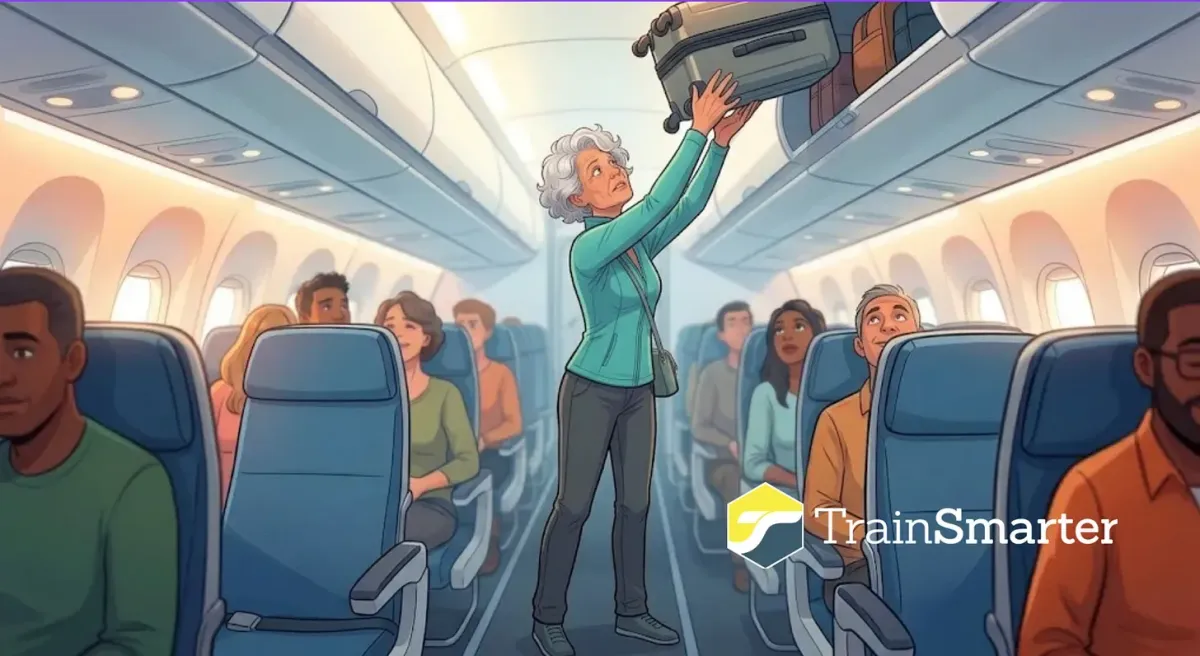
When clients tell me about why they want to be strong, they describe being able to hoist grandchildren into car seats, luggage into overhead bins, or flats of bottled water into their car.
What they don’t realize is that those movements don’t just require strength, they require explosiveness—it’s not how heavy you can lift something, it’s how fast you can move it.
Here’s the science behind what we do and why
In one study, researchers followed nearly 4,000 adults (ages 46 to 75) for over a decade. They measured two things in everyone: muscle strength, using a simple handgrip squeeze, and muscle power— how quickly someone could move a weight.
Then they tracked who was still alive a decade later, and the results weren't close.
People in the lowest muscle-power group were roughly 6 to 7 times more likely to die during the study than people in the most powerful group, even after accounting for age, heart disease, diabetes, and obesity.
Strength alone showed no statistically significant link to living longer.
That grip-strength that everyone talks about predicting your longevity didn’t matter as much as how fast someone could move.
How long have I been saying that grip strength is a correlation, not causation factor?!
A separate 2025 study backs this up, comparing upper-body strength and power in a large sample of the same people. Power was found to be significantly better than strength in predicting mortality from natural causes.
The researchers believe theirs may be the first study to directly compare the two in this way, in such a large group.
This is why power is so critical
You almost never need to grind something heavy in slow motion in real life. What you need is speed against resistance — catching yourself when you trip, climbing stairs without hauling yourself up by the railing, standing up off the floor or a chair in one motion, stepping quickly out of the way of something coming at you.
Every one of those is muscle power, not strength.
Being able to react quickly to a stumble matters as much as being strong enough to catch yourself in the first place. If you can't react fast enough, strength alone won't catch you as you fall. That's especially serious for anyone dealing with osteoporosis or osteopenia, where a fall can be particularly dangerous.
Power fades faster than strength as we age
Both peak somewhere between 25 and 35, then decline gradually until they drop off more steeply after 60. Power goes first and fastest.
The term for age-related muscle loss is sarcopenia. The loss of muscle power and speed is known as dynapenia. The combination of losing both is more impactful to someone's independence than either one alone. While power is the first to decline, it’s where you have the most to gain when you train it.
The brain-muscle connection
Power training doesn’t just train your muscles. It also trains your brain. Your brain has to learn how to respond quickly and tell your muscles to activate more fast-twitch fibers. Practicing explosive movements sharpens the brain-to-body connection, enabling it to operate faster and more efficiently.
It’s like what we talked about regarding “super movers.” The more you practice moving quickly, the faster you can become.
This is what power training looks like
Power training has a unique protocol:
Fewer repetitions: We keep reps low because we want maximum explosive effort behind every single movement. Quality over quantity.
More sets: Usually 4 to 6 sets per exercise.
Rest periods: About 30 seconds of rest between sets to allow the nervous system to reset.
Lighter weights: Which do you think you can move faster: a baseball or a bowling ball? Lighter weight allows for speed. If a weight slows you down, it’s too heavy for power work.
Specific tempo: This is the hardest part for most people to master. There’s aslowphase andfastphase—slow on the way down in a squat, fast on the way up. Slow on the descent of a shoulder press, fast on the press.
When people get in a hurry and start churning out repetitions, it turns into a conditioning (aerobic) exercise instead of power work. You’ll invariably hear me in a power session reminding someone to “slow down.”
Imagine explosion, then “recoil” to gather momentum before exploding again.
Anyone can do it
You just need to remember “fast” and “slow.”
Power isn't something you either have or don't. You become more proficient with practice. Sometimes it feels like play. It’s the favorite workout of many of our clients.
And it’s modifiable for people of all fitness levels. Our 92-year-old client does it.
So can you.
