"I Don't Think This Is What I Need"
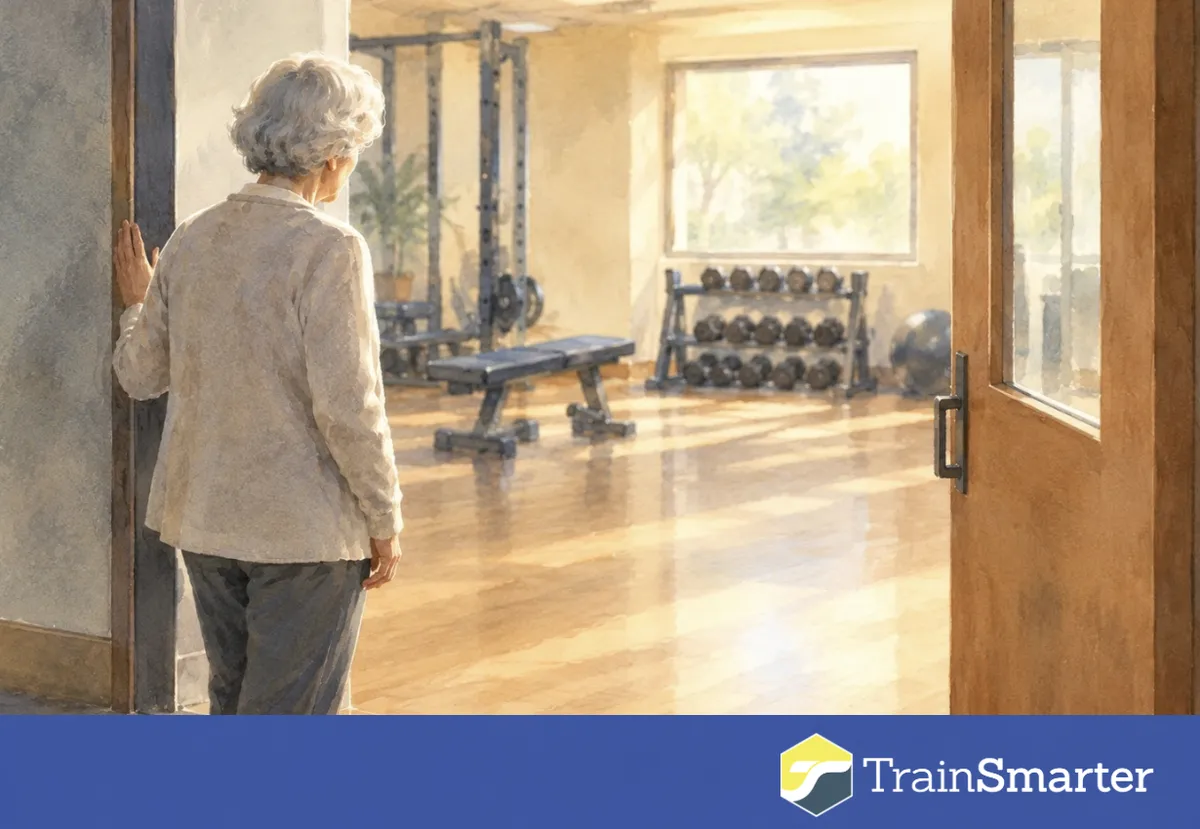
Recently, a woman in her late 80s joined us at TrainSmarter. The next day, when she came in, instead of doing her first workout, she quit.
“I just don’t think this is what I need,” she pronounced.
Asked what she thought she needed, she replied, “Aerobics and balance.”
I explained how better balance is one of the benefits of strength training. Not only do you build stronger skeletal muscles, you’re also strengthening your stabilizers.
But her mind was made up.
This tiny woman seemed frail. She had no idea what her bone density was—and had never had it measured!
There was a huge disconnect between what she needs, based on science, and what she thought she needed.
It made me so sad.
If you ask the average adult over 50 why they don’t strength train, you’ll hear a familiar list of reasons:
“But I walk every day…”
“I don’t want to hurt my joints…”
“I don’t care about getting muscles…”
This study makes the case for anewreason to strength train.
Researchers analyzed data from more than 458,000 adults ages 40 to 69, making it one of the largest studies ever conducted on the relationship between muscle health and infection risk.
Participants were sorted into three groups: sarcopenia (low muscle mass plus strength issues), pre-sarcopenia (low muscle mass only), and no sarcopenia.
Compared to people with healthy muscle mass, both the pre-sarcopenia and sarcopenia groups had a higher risk of
respiratory infections ( pneumonia, flu, and severe bronchitis)
urinary tract and skin infections
and most notably, sepsis, an often life-threatening immune response to infection or injury.
The study found that younger adults with low muscle mass had an even higher infection risk than older adults with healthy muscle mass! Losing muscle early may be a sign that something in your overall health needs attention, regardless of your age.
Age matters, but aging itself isn’t so much a factor as the loss of muscle is.
The usual disclaimer: It’s the old “correlation vs causation”—reduced muscle mass might contribute to greater vulnerability to infection. Or chronic illness causes muscle loss, or other health factors influence both.
Still, the researchers concluded that skeletal muscle health is closely tied to factors beyond physical strength, including immune resilience.
How strength training supports your immunity
Researchers advanced three ideas:
1. Strength training is stress-training for your cells
Lifting weights creates stress—beneficial stress—called “eustress.” Your body adapts to that stress, making your system more resilient when hit with a stressor like an infection. Infection is a different kind of stressor, but your body draws on some of the same mechanisms to respond to it and recover. People with more muscle mass tend to tolerate major stressors, like surgery or chemotherapy, better. I give this resilience all the credit for how quickly I bounced back from my accident in August.
2. Muscle loss and inflammation are connected
Muscle loss is directly linked to chronic, low-grade inflammation, which exhausts your immune system. In this study, Blood tests showed that certain inflammation markers partially explained the link between lower muscle mass and higher infection rates.
3. Strength training activates immune cells
Studies show that several weeks of regular strength training resulted in changes related to better immunity and reduced inflammation.
This isn't proof that lifting weights will keep you out of the hospital. But it fits a pattern researchers have been seeing for years.
Even a single strength-training session can activate certain immune cells. Whether that translates into fewer infections isn’t certain, but the direction of the evidence is consistent.
Strength is a crucial part of taking care of your health
We spend a lot of time thinking about how to live longer and stay healthier as we age, but we don’t always connect strength training to the bigger picture of longevity.
Being strong or looking fit barely scratches the surface of what strength training can contribute to our lives.
I know, for many of you, I’m preaching to the choir. I’m counting on you to help me get the message out:
Strength training isn’t just about looking a certain way or being able to lift something heavy. It’s an important ingredient for staying resilient — not just against falls and frailty, but against the infections that become more dangerous as we get older.
Being stronger instills greater confidence, supports our ability to be self-sufficient, makes it possible for us to participate in the activities we enjoy, and helps us weather health challenges.
I wish I could have convinced the woman who decided that strength training wasn’t “what she needs” to give strength training a chance. I wish she could see that building strength could help her achieve the things she cares about and so much more.
It’s never too late for her to change her mind
Research shows that people 75 and older who start strength training for the first time can still build muscle and improve their day-to-day function.
Your muscles never lose their ability to change and grow.
Help Us Spread the Word
Do you have a friend, spouse, or parent who still thinks walking is “enough” exercise? Please forward this article to them. Let’s help the people we love build the strength and immune armor that can change their lives.
