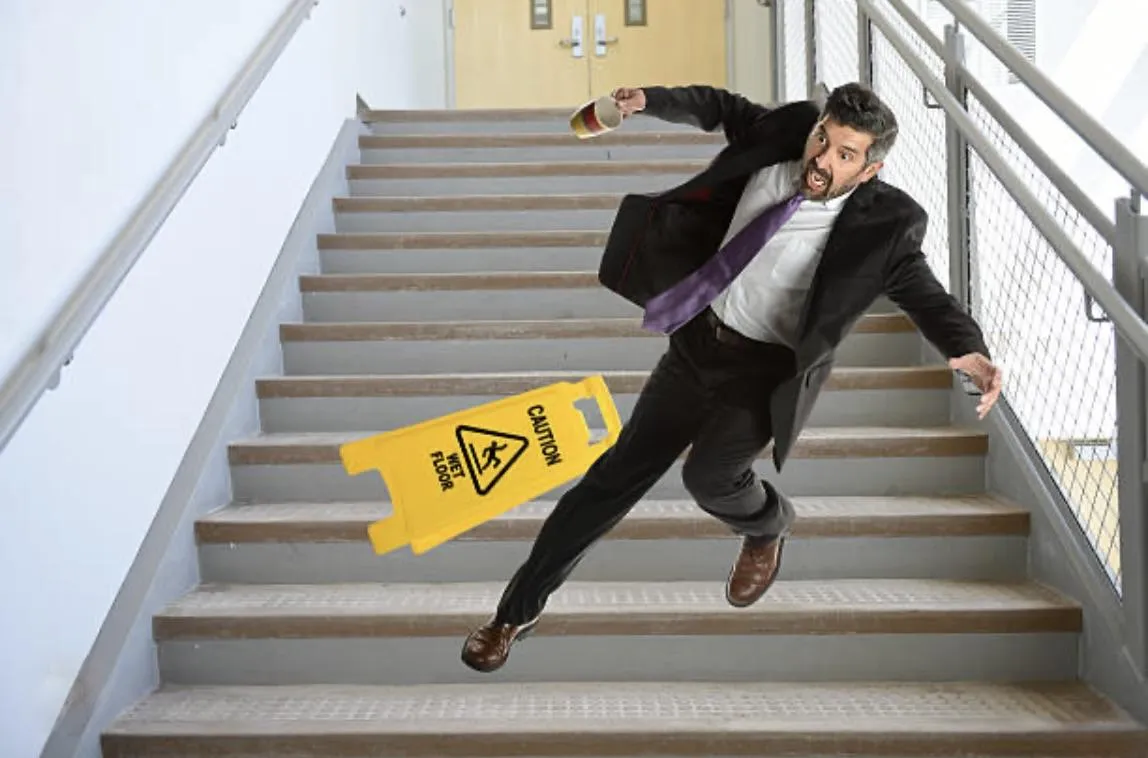
How to Be Harder to Hurt When You Fall
“I’ve fallen, and I can’t get up.”
If you’re old enough to remember that commercial, you probably also remember what a joke it became.
But falls aren't funny. They're one of the most serious health risks facing adults over 65. More than 1 in 4 will fall this year. About a million will be hospitalized as a result. In 2021, falls were the leading cause of injury death in that age group.
I'm bringing this up now because I've heard of numerous falls lately.
Two were out walking or running in the dark--one more consequence of the time change that throws us off every year.
Another missed a step because she was wearing thick-soled shoes and didn't pick her foot up enough to clear a step.
There are two things you can control:
How you fall.
How prepared your body is before you hit the ground.
Let’s start with the first.
If You’re Going Down…
No one plans a fall. You get a split second to react.
The instinct for most people is to stiffen up and throw their hands out. That’s how wrists get broken.
Instead:
Try to land on something soft. Grass, carpet, even a couch cushion beats concrete.
Aim for the "meat," not the bone. Stay loose and rotate so your glutes (your buns) absorb the impact. There’s more natural cushioning there, making your backside a better landing pad.
Tuck your chin. Whichever way you're going, tuck your chin to your chest. This prevents the "whiplash" effect that leads to head injuries and concussions. If you do hit your head, don't brush it off. Symptoms can take hours or even days to appear.
Relax, bend your knees, and roll if you can. Lower your center of gravity, and let yourself melt toward the ground, dispersing the impact over several parts of your body. Falling forward? Aim for your shoulder rather than your face and roll along your spine. Sideways? Let your thigh hit first, then curl and roll. Try to spread the force across as much of your body as possible.
Now -- Let's Keep It From Happening
Falling well is a useful skill. Not falling at all is a better one.
Our goal at TrainSmarter is to keep you on your feet. Thats why we prioritize the following in our programming:
1. Full-Body Strength You have to be strong enough to support and catch your own body weight. We focus on leg, hip, and torso strength to keep you stable and upright when something throws you off balance.
2. Dynamic Balance (not the kind where you stand still) We're teaching your nervous system how to have a "near-fall" and then catch itself. This is why we do single-leg work.
3. Power Training Power trains quickness, for both your muscles and brain. Quick reaction time can prevent a fall.
4. Impact Training Impact-style movements, like the ones we use in power training and our SPIRE program, keep your hips and spine strong. Jumping, skipping, and light plyometrics also help maintain bone strength, especially at the hips. If a falldoeshappen, good bone density is the difference between a nasty bruise and a hospital stay.
Health matters! Conditions like diabetes, arthritis, depression, vision loss, and hearing loss all increase fall risk. Managing them now sets you up for better stability later.
A few practical things to remember...
If you're walking or running in the dark, wear something reflective and slow down. Your reaction time needs to match your visibility. Right now, visibility is limited.
Check your shoes. Thick soles can be treacherous on stairs and uneven surfaces. If your shoes have changed, your movement patterns may need to catch up.
Look at your rugs, your lighting, and your stairways at home. Most falls happen in familiar places precisely because we stop paying attention.
Nobody plans to fall. But we can plan to be harder to hurt....and more likely to get back up.
Stay strong. Pick your feet up. And maybe invest in a headlamp. 🔦
