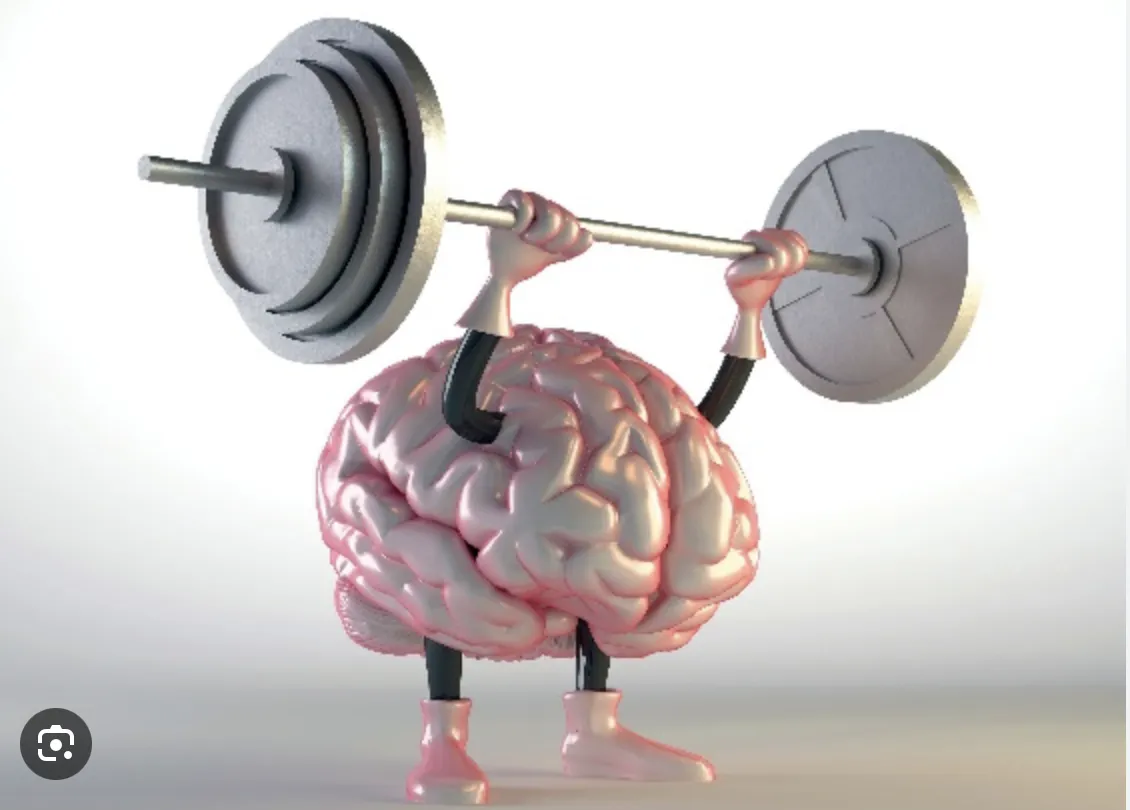
Want a Younger Brain? Lift Weights!
If you need another reason to strength train--especially in midlife--here it is: More musclei s associated with a younger brain.
In a new study of nearly 1,200 healthy adults in their 40s, 50s, and early 60s, researchers found that people with greater muscle mass tended to have brains that appeared to be biologically younger than those with less muscle.
On the other hand, people carrying more deep belly fat (visceral fat)t ended to have older-looking brains.
The evidence keeps growing that building and maintaining muscle isn’t just about strength, metabolism, or independence. It may be an important part of protecting brain health as we age.
We already knew exercise helps the brain…
Decades of research show that aerobic exercise increases levels of BDNF (brain-derived neurotrophic factor), often called “Miracle-Gro for the brain.”
BDNF helps create new neurons and strengthens connections between them.
In animal studies, exercising rodents grow far more new brain cells than their sedentary buddies and perform better on memory and learning tasks.
In humans, as little as 25 minutes per week of walking,swimming, or other conditioning exercises has been linked to greater brain volume in older adults, and 3,000 steps per day can slow cognitive decline in people at risk for Alzheimer’s disease.
Most studies have focused on cardio. What about muscle mass? What effect might visceral fat have?
Muscle, fat, and “brain age”
Using MRI scans and artificial intelligence, researchers analyzed total muscle mass and body fat in more than 1,100 adults between the ages of 40 and early 60s, the time when common risk factors for later dementia typically start to develop.
They estimated each person’s “brain age” by comparing their scans to tens of thousands of others and the patterns were striking.
Muscle mass and visceral fat were both strongly linked to apparent brain age.
More muscle = younger-looking brain
More visceral fat = older-looking brain
People with low muscle and high belly fat had theoldestbrains of all
Subcutaneous fat--the "pinch an inch" kind just under the skin--was not associated with brain aging at all.
The real troublemaker was visceral fat, which is known to drive inflammation throughout the body, including the brain.
How does muscle protect the brain?
Muscle isn’t just for movement.
It’s a metabolically active tissue that releases biochemicals supporting brain cell growth, communication, and resilience.
Visceral fat releases signals that do the opposite.
The challenge is that we start losing muscle in midlife unless we actively work to keep it.
The good news is that strength training can slow, stop, or even reverse that loss—at any age.
If you want to protect your brain as you age:
Strength train to increase/maintain muscle mass
Reduce visceral fat
Get at least 25 minutes of conditioning exercise per week
This study hasn’t been peer-reviewed, and doesn’t prove cause and effect, but the relationship between muscle, visceral fat, and brain aging is hard to ignore.
As one researcher quipped,"If you want a younger, healthier brain, strength train.”
