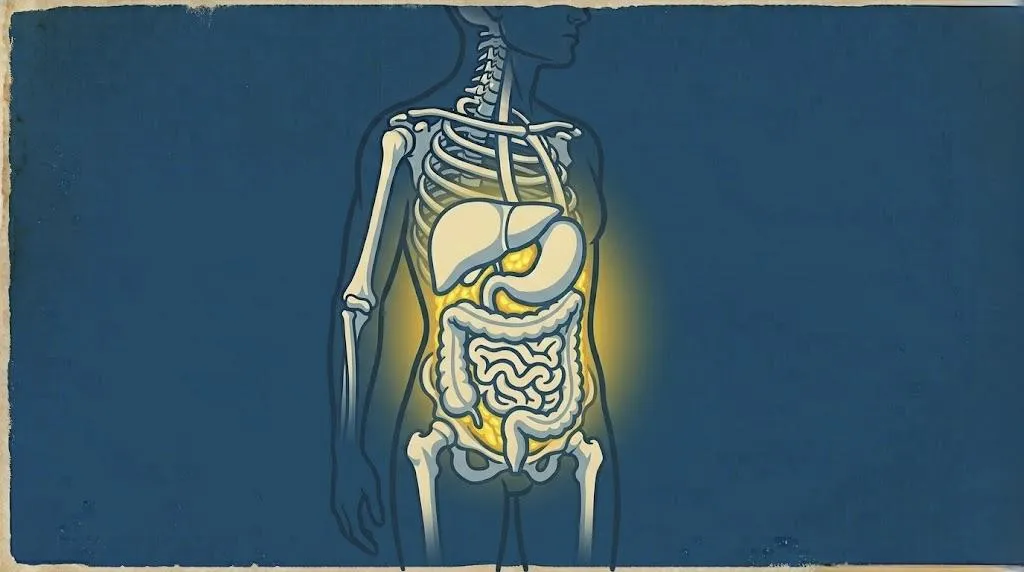
You Can't See Visceral Fat But Your Brain Knows It's There
When we do InBody scans on our new clients (and repeat scans on our existing clients), I tell them that there’s one number I look at first—visceral fat.
Visceral fat is the fat we carry around our internal organs—not the subcutaneous “Santa Claus belly” that shakes like a bowl full of jelly, but fat that lies beneath the abdominal muscles.
You can’t liposuction it away.
Doctors have known for a while that carrying excess weight raises dementia risk. We now know that the issue isn’t about your total weight or BMI. It’s about where the fat resides.
A recently published study mapped fat distribution against brain scans and cognitive test scores in more than 18,000 people— the largest study of its kind to look at fat location and how it relates to brain structure and thinking ability.
Fat in your arms, legs, trunk, and around your organs (visceral fat) was linked to changes in different, separate brain systems — areas tied to movement, emotion, memory, even the brainstem.
Two people with the same weight can carry completely different levels of risk to their brains, depending on where their fat lives.
The standout finding….
Visceral fat was the only type of fat directly linked to damage in the brain’s white matter— the wiring that carries signals between neurons. White matter damage is closely tied to small vessel disease and vascular cognitive impairment, both of which are related to dementia risk.
The researchers theorized that visceral fat triggers chronic, low-grade inflammation that spills over into the brain itself.
Fat elsewhere on the body — arms, trunk, legs — didn’t share this strong inflammatory signature.
While this is observational research, it shows a strong association, not proof that visceral fat directly causes brain aging. The mechanism (inflammation, insulin and glucose pathways) lines up with other research.
Research out of Washington University found that people with more muscle mass relative to visceral fat tended to have younger-looking brains on imaging, regardless of their overall body size.
It’s not just “less visceral fat is better.” Having more muscle appears to actively protect your brain.
The researchers are optimistic for one big reason — unlike your genetics or your age, visceral fat is something you can change.
What reduces visceral fat? (I get this question a lot)
Visceral fat is extraordinarily responsive to lifestyle changes.
Good news for anyone already lifting weights: resistance training is one of the most effective tools we have.
Metabolism: Building muscle raises your resting metabolism, so you burn more calories even sitting still. One study on women found a single 30-minute strength session measurably raised calorie burn for up to 14 hours afterward.
Fat loss: Several studies have found resistance training reduces visceral fat specifically, without cutting calories.
Hormone balance: More muscle improves insulin sensitivity and helps keep cortisol in check. Cortisol is strongly tied to fat storage around the midsection.
If you’re not already strength training, you don’t need a complicated program to start. Full-body basics — squats, deadlifts, lunges, pushups — recruit the largest muscle groups and trigger the greatest metabolic response.
Factors that raise visceral fat
Not getting enough sleep raises cortisol, cravings, and insulin resistance.
Poor diet: Eating lots of added sugars, refined carbohydrates (like white bread and pastries), and trans fats triggers your body to store more deep abdominal fat.
Too many calories: Consuming more calories than your body burns through daily movement leads to excess energy storage.
A sedentary lifestyle stops your body from burning stored fat efficiently.
Excess alcohol: adds extra empty calories and forces your liver to work harder, which impacts how your body processes fats.
High stress: Ongoing mental or physical stress releases cortisol, a stress hormone that signals your body to increase visceral fat storage.
Hormonal Changes: Declining sex hormones (such as lower estrogen after menopause in women or lower testosterone in men) changes where your body stores fat. Women who used to be pear-shaped tend to become apple-shaped.
Aging: As you get older, your metabolism slows and you tend to lose muscle mass, which shifts fat distribution toward the abdomen.
Genetics: Your DNA helps determine your natural body shape and how strongly your body is wired to store fat around your organs.
Having some visceral fat is normal and healthy. It cushions and protects your internal organs. But having too much visceral fat can be harmful.
Control the risk factors you can.
Building muscle through smart strength training doesn’t just change your body composition.
You're protecting your brain's wiring for decades to come.
