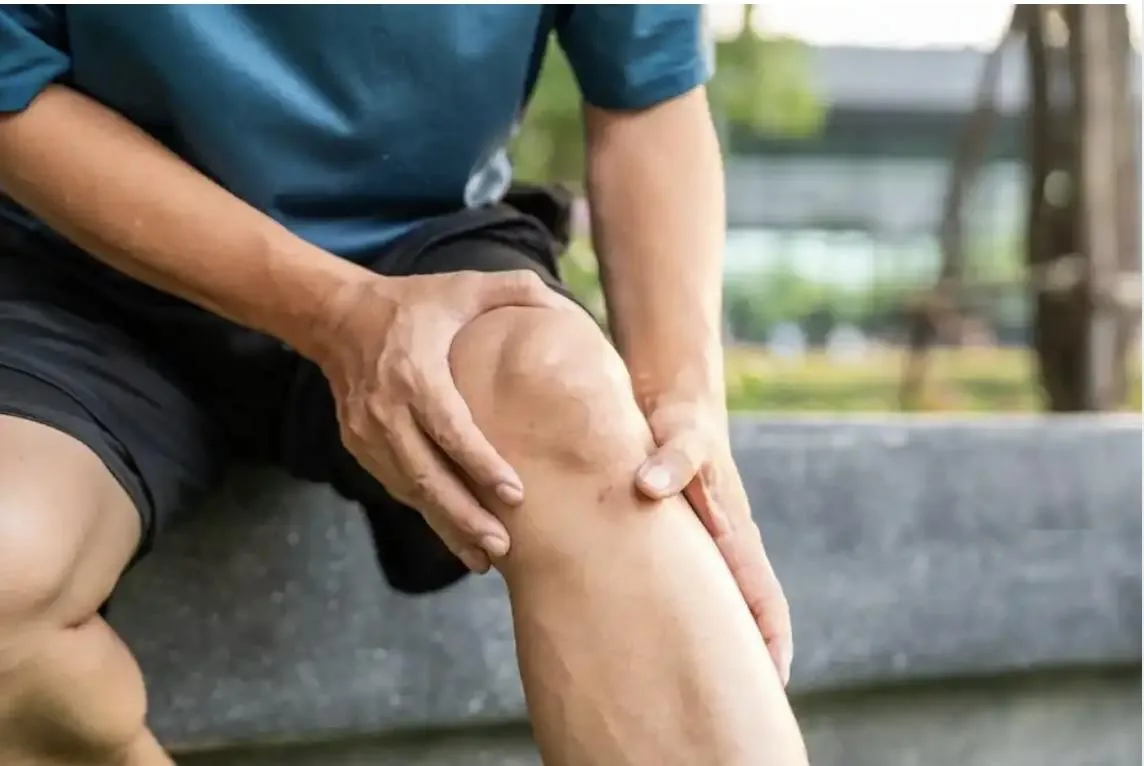
The Belief That’s Costing You Your Knees
Years ago, I'd ask a client to do a step-up and often, the moment they felt something in their knee, they'd stop cold. "I can't do that. It hurts my knee."
Instead of giving up, I'd say:"Let's just be curious. Aim your knee in this direction and push through your heel."
Invariably, the response was:"Oh! That doesn't hurt."
Monday, I taught a new client who'd been concerned about her knees how to stand up using her hips preferentially to her knees.
"No pain!" she exclaimed, and was beaming the rest of the session.
That shift from fear to curiosity is one of the most powerful things that can happen in a training session.
The Mistaken Belief
The assumption people make is that if your knee hurts during exercise, you must be damaging it. That belief has led people to rest, avoid, and lose the strength and mobility critical for independence.
Here's what the research shows:
A 2018 review of 9 studies found that therapeutic exercise doesn't harm cartilage in people with knee osteoarthritis.
It appeared to improve cartilage composition.
A long-term US study found that moderate physical activity was associated with slower disease progression than low activity.
Your cartilage doesn't wear out like a tire tread.
It's living tissue that responds to load. Within reason, more movement is better than less.
The Danish GLA:D program, typically 6–8 weeks of supervised education and exercise, has treated over 28,000 patients across Denmark, Canada, and Australia.
At 12-month follow-up, only roughly 10% of knee OA participants had progressed to joint replacement. Two-thirds of those who initially wanted surgery no longer wanted it.
Participants experienced pain reduction, improved cartilage composition, stronger quads and glutes (the best predictors of knee function), reduced systemic inflammation, better bone density, and improved cognitive function.
What About a Meniscus Tear?
The ESCAPE trial randomized 321 patients with degenerative meniscus tears to surgery or supervised exercise therapy. At 5 years, knee function and arthritis progression were comparable between groups.
A 2022 review and meta-analysis found no benefit in surgery over exercise therapy for degenerative meniscal lesions.
Based on what I've read, if you have a degenerative meniscus tear and a surgeon recommends arthroscopy, ask: what’s the evidence this beats supervised exercise at 5 years? The answer is that it doesn’t.
(Acute traumatic meniscus tears in younger active patients are a different story.)
"Bone on Bone" And Other Things That Sound Worse Than They Are
I've lost count of how many clients arrived at TrainSmarter announcing, dramatically, that their knee isbone on bone, certain they were on their way to a knee replacement.
Some of them now have no knee pain at all.
"Bone on bone." "Degenerative disc disease." These phrases sound catastrophic. They make people feel broken when they aren't.
An MRI doesn't accurately reflect pain.
People with alarming imaging often have no pain. People with relatively clean knees may suffer significantly.
Pain isn't a reliable measure of structural damage.
How Much Pain Is Too Much?
Our physical therapists use a 0–10 scale that we've adopted as well:
Level 3 or below:keep going.
Level 4–5:continue but don't push harder. See if it settles within 24 hours.
Level 6 or above: or pain that doesn't return to baseline by the next morning, back off but don't stop training altogether.
The goal is to not let a manageable ache become a reason to do nothing.
What We've Seen
We've worked with countless people who came to us fearful about their knees and found that progressive exercise resolved or reduced their pain.
The training principle that builds bones and muscles also rehabilitates your joints: gradual, structured, progressive load.
If you have knee osteoarthritis, a degenerative meniscus tear, or both, the right move is not to rest and avoid.
It's to load progressively, monitor, and rebuild.
Your knee probably isn't as fragile as it feels.
The worst thing you can do isn't exercise.
It's avoiding exercise!
