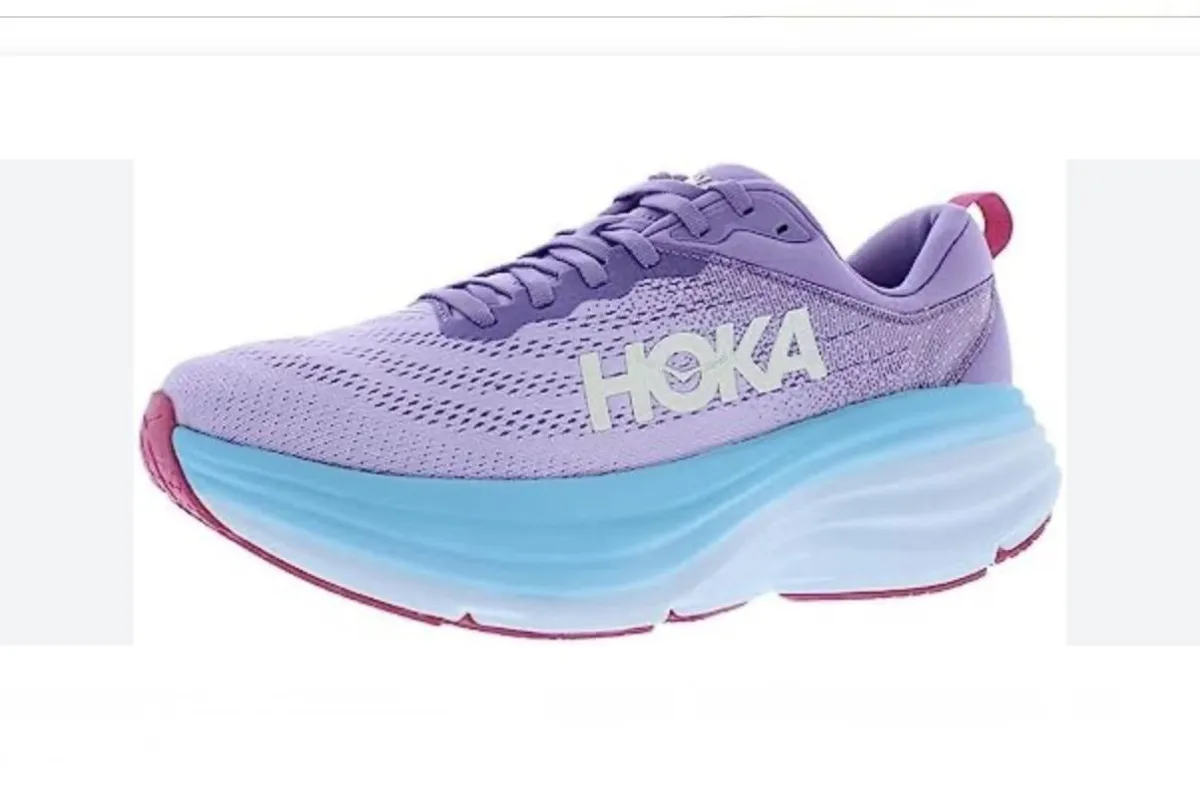
Wearing This Type of Shoe Is More Likely to Lead to Injury
I've been campaigning against thick-soled, cushiony shoes for years...maybe decades...for a host of reasons, one being that they create a fall risk because they interfere with the ability to feel the ground.
They also alter gait and increase the distance between the foot and the ground, leading to poor balance, wobbly movement, and increased risk of ankle rolls.
I've seen people catch their foot and stumble while getting accustomed to fat-bottomed shoes.
A study of runners from researchers at the University of Florida Sports Performance Center has obvious implications foranyonewho wears shoes. People who wore shoes with thicker heels had higher injury rates than those wearing flatter shoes.
The researchers analyzed more than 6 years of data from over 700 runners between the ages of 12 and 77. They looked at injury history along with shoe characteristics such as cushioning, weight, and heel height.
They also studied how participants’ feet contacted the ground using motion-capture technology.
Interesting discovery about heel striking
Compared to those wearing flatter shoes, people wearing thick-heeled shoes were less accurate at identifying how their foot struck the ground, described as "a likely factor in the high injury rates."
They thought they were landing on their forefoot, but they were clearly landing on their heels.
According to the researchers, thicker heels dull the body’s ability to sense the ground. When that feedback is reduced, it's harder for your muscles and joints to react naturally to each step.
Imagine standing on a soft foam pad. Your balance becomes less stable because your body can’t feel the ground as clearly. Highly cushioned shoes create a similar effect when you’re moving.
With less feedback from the ground, your body relies more on the shoe for stability rather than on the muscles and joints that normally help control movement. Over time, that could increase the likelihood of issues like ankle sprains, knee pain, or other overuse injuries.
To be clear, the study doesn't prove that thick-heeled shoes cause injuries; researchers found a correlation between heel height and injury rates.
Many factors influence injury risk, including exercise habits, strength, mobility, and walking or running volume.
Still, the findings highlight an important idea: the body works best when it can sense and respond to the ground beneath it.
If you’re shopping for new shoes, look for options that are comfortable without being thick or rigid. Shoes that are flexible, breathable, and allow your toes enough room to move are good choices.
Pull the insole out of the shoe and stand on it. If your forefoot falls off the sides, that shoe is too narrow.
It's hard to make shoe recommendations these days
Companies we used to recommend, like Altra and Brooks, wanted to get in on the financial action Hoka was raking in, so they started pumping up the soles of their shoes.
New Balance went so far as to create what they called the "platform sneaker."(I know that because it was on my daughter's Christmas list...thank goodness they were sold out...)
Rather than look for a particular brand, just think
flexible--can you twist it?
zero drop--the heel isn't higher than the forefoot
wide toe box--enough to accommodate your forefoot
minimal sole--mine is pushing the limit at 7/8"
Your feet are designed to feel, adapt, and respond to the ground. When you put them on top of thick, cushioned platforms, you dull that feedback and ask the shoe to do work your body should be doing.
If your shoes are doing all the stabilizing, your body is doing less of it.
Like anything else, what you don’t use, you lose.
Choose shoes that let your feet do their job.
