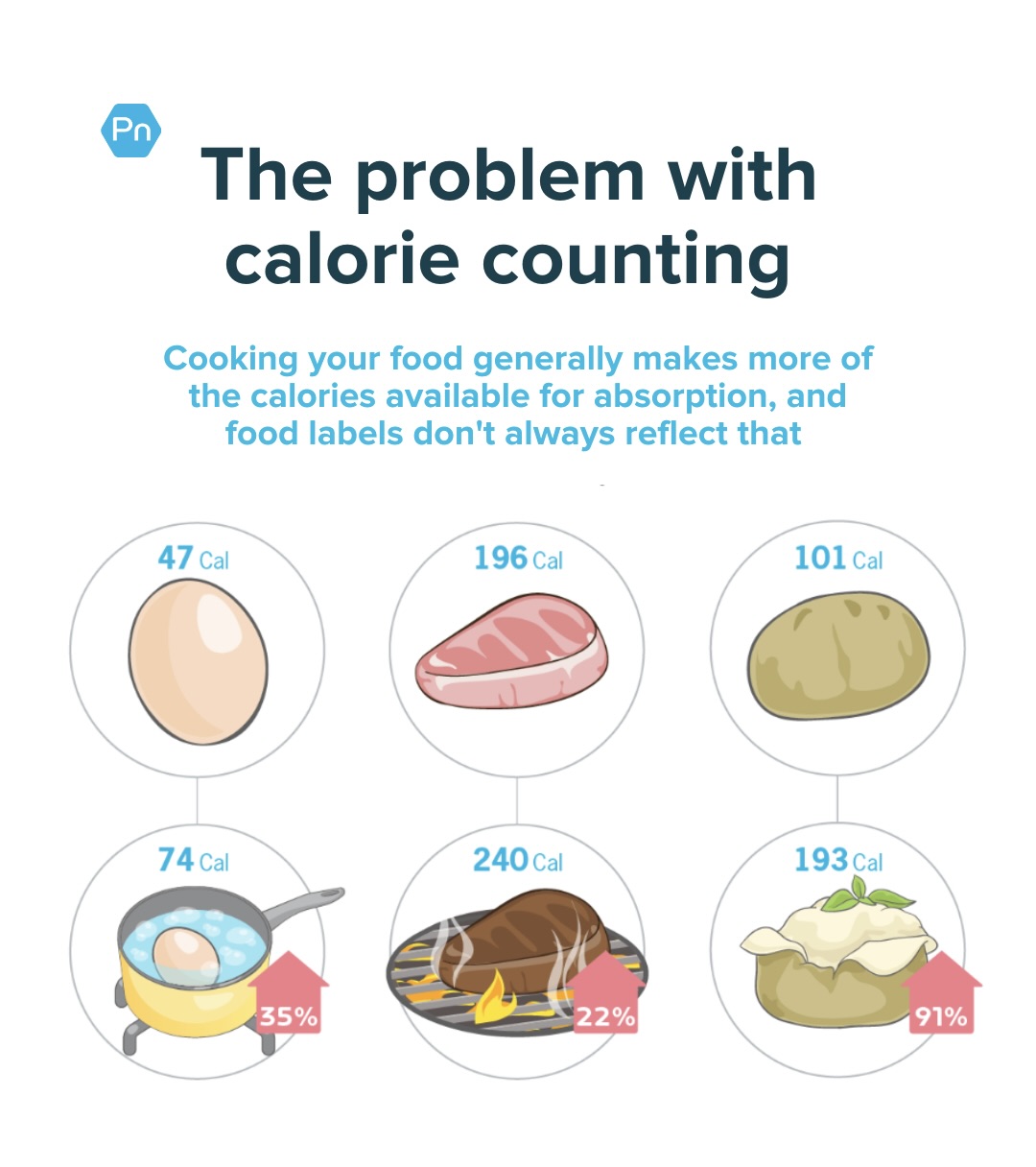
A Calorie Is a Calorie..... Except When It Isn't.....
"But I'm tracking everything." I hear this from frustrated people.
They've logged every meal, but the scale isn't moving.
The number on nutrition labels helps with comparisons, but it's an estimate--that can be as much as 20% inaccurate.
Depending on who's eating that food, the calories your body absorbs can vary dramatically.
The Energy Gatekeepers
Calories "count" once they're broken down. If your body can’t digest a component of food, it passes through, taking those calories with it.
Two people eating the same meal can end up with different caloric totals. It comes down to 3 main factors:
Your Gut Microbiome: About 90% of calorie absorption happens in the small intestine. The rest depends on the trillions of bacteria in your colon—your gut microbiome.
Everyone’s microbiome is different, and some are more efficient at extracting energy from food than others. Certain microbes, especially those that thrive on fiber, can convert leftovers into usable energy, contributing up to 10% of your daily calories.
One person's baked potato isn't necessarily another person's baked potato.
Enzymes: Digestion is powered by enzymes. If your body produces fewer of them due to genetics or conditions like lactose intolerance, certain calories stay "locked" in the food and leave the body unabsorbed.
Health Conditions: Celiac disease and Crohn’s can damage the villi in the small intestine, leading to malabsorption. IBS can speed up digestion, so food moves too quickly for full calorie extraction.
Quality Over Quantity: The Ultra-Processed Trap
It isn't justwhois eating; it’swhatthey're eating. A recent study challenged the "a calorie is a calorie" belief by comparing ultra-processed diets to whole-food diets with nearly identical calories, carbs, and fats.
Participants on the ultra-processed diet gained significantly more body fat because highly processed foods are easy to digest and absorb, while whole foods, especially those high in fiber, require more work..
That affects both calorie absorption and how full you feel after eating.
Protein Changes the Equation
Protein is metabolically different from carbs and fats. It requires more energy to digest, is less likely to be stored as fat, and is more likely to be used for building muscle, which further boosts your metabolic rate.
It keeps you fuller longer, which reduces overeating.
In one study, resistance-trained men were fed over 5 times the recommended daily amount of protein every day for 8 weeks, while keeping everything else consistent.
Their daily caloric intake shot up by about 600 calories but their body weight didn't change!
Research has found that when people significantly increase their calorie intake through protein, they don’t gain weight as calorie math would predict.
From a “calories in, calories out” perspective, that shouldn’t happen--but in the human body, it does.
Do Calories Matter?
Yes--but not the way we used to believe.
Calorie tracking can build awareness and help you recognize which foods throw you off track.
It makes you pause and think before you eat. That mindfulness may be as valuable as knowing the exact calorie count of everything on your plate.
Calories do count, but your metabolism isn't a calculator. It's a complex system influenced by your gut health, enzymes, and the quality of what you're eating.
Simple habits--more protein, more vegetables, less ultra-processed food--count more!
