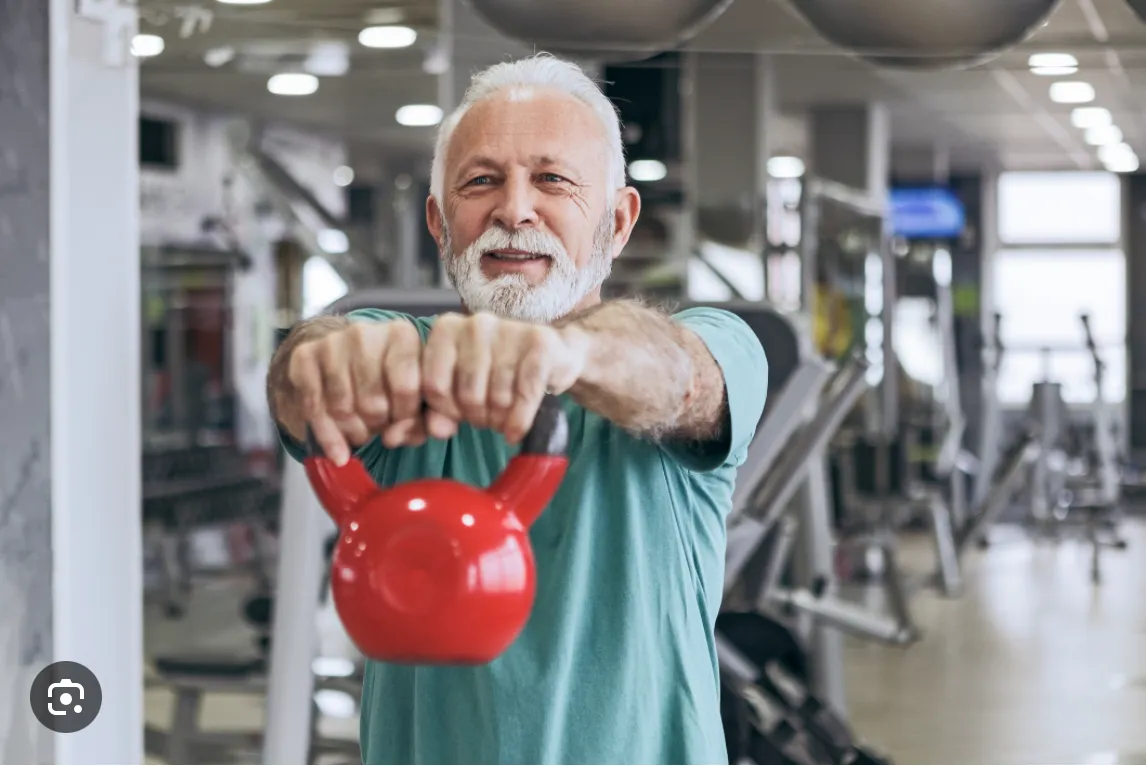
The Science Behind Power Week--And Why Everyone Needs It!
If you've watched kids on a playground, you’ve seen them jump off swings, leap from climbing walls, and basically "hit the ground" constantly.
They're doing exactly what their skeletons need.
As we get older, we become cautious. We trade jumping for walking and leaping for strolling.
It's no coincidence that it's also when we start losing muscle and bone...and the ability to generate power.
Power is your ability to move quickly--catching yourself when you trip, getting out of the way, reacting before you have time to think.
I'll never forget the day I took a woman who was probably the age I am now and who'd been working out for years, into a room with a spring-loaded wooden floor and said to her, "Jump. Just once. I don't care how high."
She couldn't get her feet to leave the floor. I was astonished.
That day I became a believer in power training.
The Power of the Jump
Adding even a small amount of jumping to your routine can significantly benefit bone health, particularly in thefemoral neck, one of the most fracture-prone areas of the hip.
In randomized trials with both women and middle-aged men, jumping just 10–20 times twice a day saw measurable hip bone density gains over a year.
A 1% to 1.5% increase might sound small, but remember:you're working against a natural decline.
Slowing bone loss is as much of a "win" as gaining it.
The bone-building magic happens on impact, when your full foot hits the ground and forces travel up through your skeleton.
That's why jumping rope doesn't count and why the quality of your landing matters as much as the height of your jump.
Jumping ropeis aboutminimizingcontact with the ground for speed.
Jumping for bone healthis aboutmaximizingit.
Researchers say a solid, full-footed landing with a brief pause before the next jump gives bone the signal it needs to adapt and strengthen.
⚡️A video demonstrating this simple drop-jump method was uploaded to Instagram recently and racked up over 900,000 views.⚡️
The formula isn't complicated: 40–100 jumps, two or three times a week, mixing up directions (in place, side to side, off a low box).
The goal is to surprise your skeleton with something it isn't used to and gradually increase the challenge over time.
Jumping isn't where you start.
If you've been diagnosed with osteoporosis, we begin with "Heel Drops" to get that vibration into the bone safely.
For everyone else, we build the "shock absorbers" first. Squats, deadlifts, and lunges are the foundation that allows your muscles to absorb the impact so your joints don't have to.
They're the foundation that makes jumping both safe and effective.
If you've been walking for exercise and wondering why your bone density numbers aren't moving, here's an opportunity to add something your skeleton hasn't seen before.
Join me for power training next week to experience this firsthand.
It can be scaled to people of all fitness levels
We'll not only be loading your bones, we'll be training your muscles andbrainto move and react quickly.
That’s why we have Power Week.
It trains something most people gradually lose and don’t realize until they need it!
