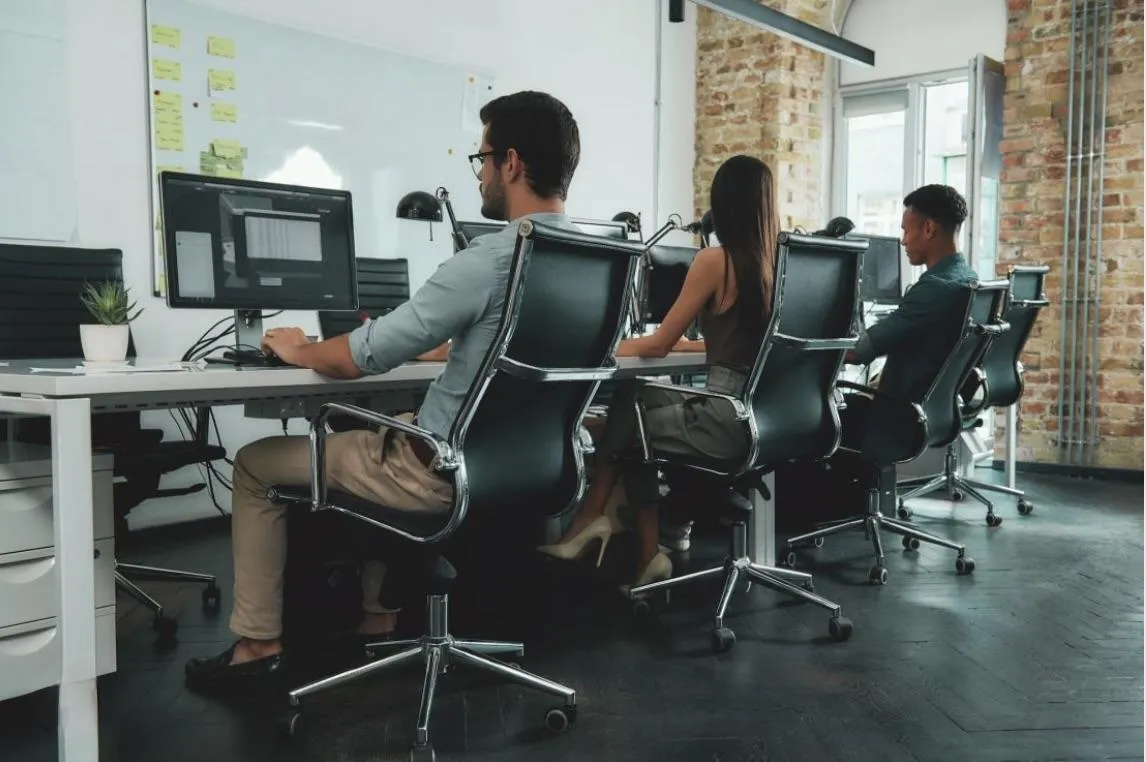
Good News For Everyone Who Works at a Desk
If you work at a computer most of the day, you’ve probably had that nagging thought:
“I sit too much.”
And right behind it, a little guilt, because you've probably been told that "sitting is the new smoking."
Some of our clients spent entire careers sitting--anesthesiologists and CRNAs who had no choice but to remain beside their patients for hours at a time.
If you work at a computer (I've been sitting here at my computer for a while now) you've probably felt that guilt about it.
Here's some news that might make your workday feel a little better.
Not all sitting is the same.
A recent Swedish study tracked over 20,000 adults for 19 years and found that thetypeof sitting you do matters just as much ashow muchof it you do.
Mentally active sitting--working at a computer, attending a meeting, knitting, doing a puzzle--carries significantly lower dementia risk than mentally passive sitting like watching TV or scrolling social media.
Adding just one hour of mentally active sitting per day lowered dementia risk by 4%.
Swapping a passive habit for an active one, say, trading an hour of Netflix for reading or a hobby, reduced risk by 7%.
Combining physical activity with mental engagement was the most powerful combination of all, reducing dementia risk by 11%.
If you're spending your days deep in spreadsheets, writing reports, or solving problems, your brain is getting a workout even when your body isn't.
Physical activity combined with mental engagement is the winning combination.
Instead of feeling guilty about your desk job, think about what you do with the hours you're not at your desk. There's your biggest opportunity.
Small shifts can make a difference:
Keep your work time focused and intentional (not half-working, half-scrolling).
Break up long stretches with short bouts of movement when you can, ideally every hour.
I took a break to rearrange some kitchen cabinets in the midst of working on this post....
Time spent in intense concentration can be exhausting. That's when low-intensity activity, like taking a walk or knocking out a chore, can be restorative and give your brain a breather.
After a long day, it’s tempting to default to whatever requires the least effort. TV. Social media. Background noise.
Nothing wrong with that in small doses.
But we may have a problem if all your non-work time becomes mentally passive.
Instead of asking, “Did I sit too much today?”
Ask,“ How did I use my brain while I was sitting?”If you want to take it one step further, this is exactly where activity comes in.
Movement matters. The research on what it does for your brain, your bones, and your overall health is overwhelming.
The most protective combination we see for both bodyandbrain is:
Challenge your muscles.
Challenge your mind.
Do both consistently!
