Nobody Can Tell You When You're "Old"
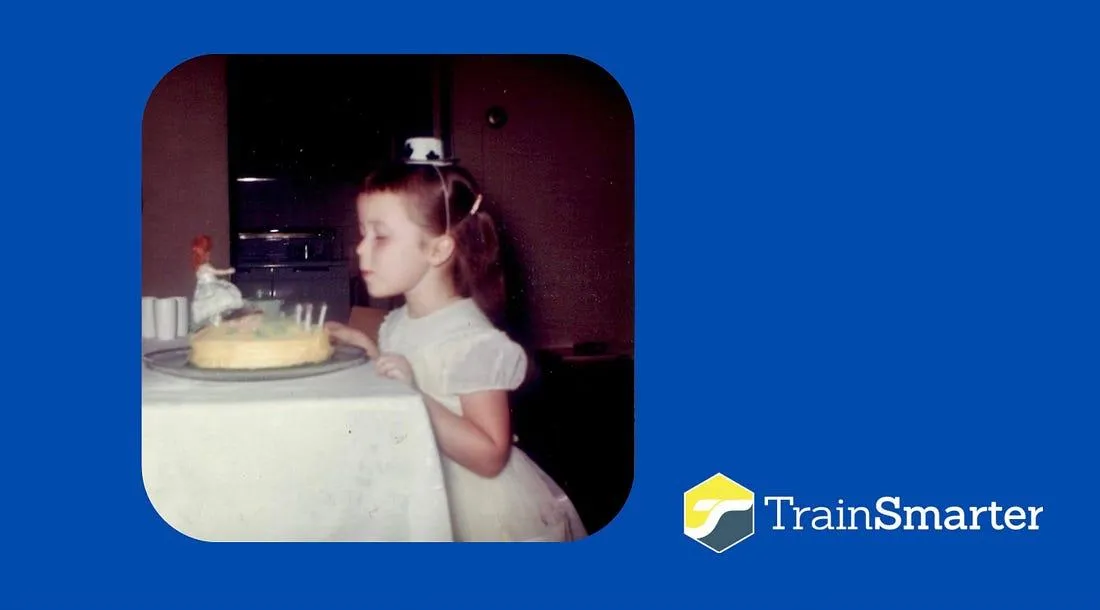
As if I needed anything to make me feel more like an old lady than that nearly catastrophic fall, I’m staring down a birthday next week. It’s a big one.
You know what I mean. One with a zero in it.
Every year, I think of how one of my clients said to me a long time ago, “At my age, they’re all big ones!”
I often think about how my parents and their friends talked about being this age and how they couldn’t believe it. They didn’t think of themselves as “old.” They sure seemed old to me!
And now here we are….
When are you officially “old”?
I’ve been practicing calling myself “old” and “elderly” to get used to the idea.
It’s not working.
But it’s prompted me to ponder— when does “old” start?
Turns out, there’s no official metric for old age.
Researchers who calculate age based on how old your cells and tissues seem to be, as opposed to your birthdate, have found that the age at which we’re considered old keeps moving.
Middle-aged and older adults today say they feel younger than that age group did 10 to 20 years ago— a dramatic change in a short period of time!
My parents’ generation focused on crossing that retirement finish line, when they’d be able to take it easy and enjoy their old age.
My generation—at least the people I work with— is on the go, taking active vacations, and working well past “retirement age.”
Are we old?
When the government says you’re old
Historically, “old” wasn’t so much a number as whether you could still do the things that mattered to your family and community.
The official U.S. retirement age is climbing to 67 this year, but the average American retires around 62, roughly where most institutions still draw the line for "old." That 60 to 65 age range has remained in place, despite a dramatic increase in life expectancy!
When society says you’re old
Our society’s message is, “Whether or not you’re old, you don’t want to look old.”
People in their late teens and 20s are using “baby botox,” injecting microdoses of Botox to freeze facial muscles to prevent wrinkles. We’ve all heard ads for “antiaging products” that run the gamut from red light therapy to collagen supplements.
Americans spend $20-$23 billion annually on anti-aging products and treatments. The United States is one of the largest consumers of longevity and youth-preserving skincare in the world.
Some go so far as to get blood transfusions from a teenager to stay youthful.
It all boils down to how little respect we have for old people.
Think about the condescending comments about people of a certain age who struggle with technology. How often do you hear or read something positive in reference to a “Boomer”—you know, the slow-moving, backward-thinking people who won’t move out of everyone else’s way so the next generation can take over?
Eastern cultures, such as China and Korea, consider aging to be a virtue associated with wisdom. In our culture, age-based stereotypes have become more negative over the last 200 years.
When your health says you’re old
Our bodies may age faster or slower depending on what has happened during our lives. Major stressors or chronic illnesses can make us age “faster,” and accelerate our biological age.
Age is the greatest risk factor for many diseases, such as cancer, diabetes, and Alzheimer’s, that shorten and shrink our lives. Is it correlation? Causation?
After what I witnessed when I was in the hospital, I’m not surprised that nearly 95% of adults over 60 in the U.S. have at least one chronic condition, and nearly 80% have two or more.
“Old” obviously means something, but is the calendar the right way to measure it?
I suspect we enter old age at different times, according to our perceptions.
Becoming “old” is largely in our hands….and mind
Scientists are studying people who stay youthful and healthy well past 70. These “Superagers” seem to have dissociated the number of years they've lived from how their body functions.
Studying them is yielding information on how to extend not just lifespan, but healthspan — the years you live without being slowed by chronic disease.
One in three people worldwide is projected to be 60 or older by 2050. Imagine what our world would look like if we had more Superagers!
Your biological age varies, depending on what you measure: how mobile you are, how sharp your memory is, even things like telomere length.
Unlike our chronological age, most of those markers are things we can change.
Improve your mobility, and you get younger by that marker.
Clean up your sleep, your diet, or your alcohol intake, and your skin and inflammation markers can become “younger.”
Build your cardiovascular fitness, and your VO2 max and heart rate variability improve along with it.
Many things that affect our health later in life are related to our early-life choices and events.
Ah, the things we did when being old was unimaginable!
The earlier we adopt a healthy lifestyle, the better, because aging is cumulative.
That doesn’t mean that taking up healthy practices (or dropping unhealthy ones) is pointless later in life, even in our 70s and beyond.
What matters is how we feel and what we can still do. That part, more than most of us realize, is largely up to us.
My dad barely made it to 72. Mom surprised us by getting to 82.
Those ages sound “young” to me now. I find some comfort in the fact that genetics—the closest thing we have to biological “fate”—accounts for only about 25% of our longevity-related health.
Genes predispose. They don’t predetermine.
Becoming a Superager beats becoming old
I think of Superagers as being like kids. Remember when you were a kid and you bragged about how old you were? Shoot, we’d add the half-year, “I’m five and a half years old!”
I used to know a retired Air Force colonel who kept himself in good shape at a gym where I used to work. He’d walk up to strangers and proclaim, “Guess how old I am!”
Imagine being that proud and hearing people say, “Wow! That’s amazing! I would have never guessed!”
So I’m turning my focus to what a client told me just today—”The 70s have been great!”
Asked about turning 80 in January, Dolly Parton said,
“If you allow yourself to get old, you will. I say, ‘I ain’t got time to get old!’ I ain’t got time to dwell on that……”
Amen, Dolly! You never know, someday you might even hear me bragging about my age, too!
