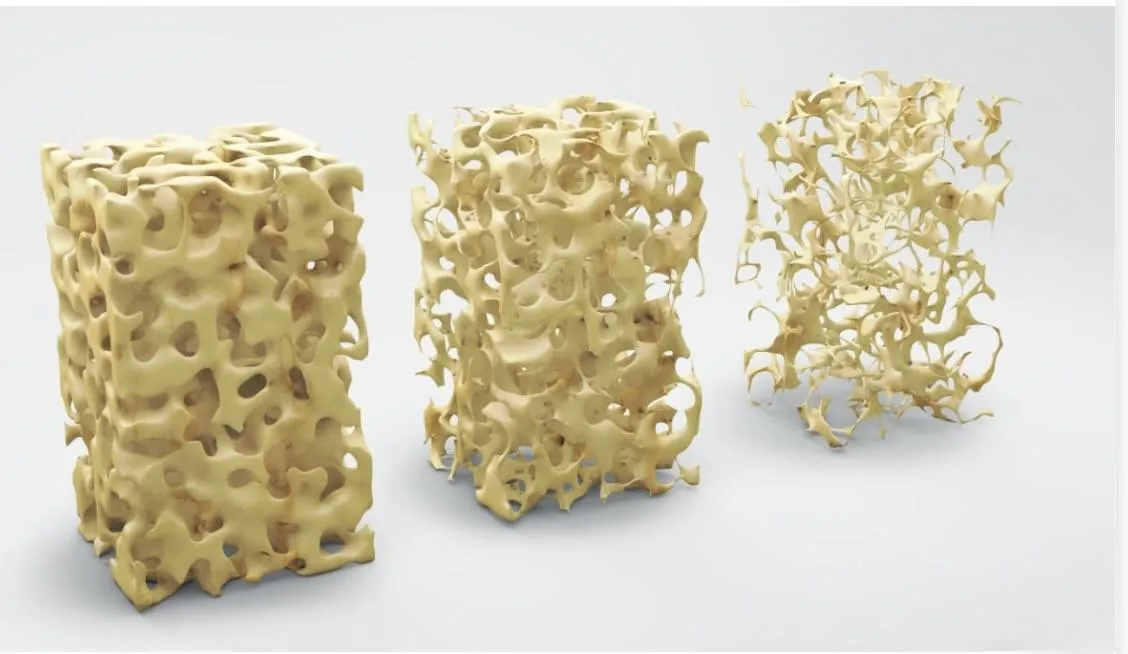
Bone Density Isn’t Enough. Here's What Really Prevents Fractures.
Charcoal and diamonds are made of the same “stuff”—carbon.
One crumbles in your hand, the other is hard enough to cut glass.
The difference? Density and structure.
These principles also apply to your bones!
Bone Density vs. Bone Quality (Why Both Matter)
Bone density is important, but when it comes to fracture risk,bone quality—the internal structure and strength of your bone tissue—is at least as important.
Sometimes even more so.
Most people focus onbone densitybecause it’s the number that shows up on a DEXA scan. Get a scan, get some numbers, know the density, and adjust diet and exercise to improve it if necessary.
Bone quality is harder to measure, and harder to improve. That's unfortunate, because the densest bones in the world might still fracture if the structure isn’t good.
Here’s another way to look at it:
California and Nevada have equally dense bedrock. California's fractures a lot more due to internal fault lines. The problem isn’t the material,it’s the structure.
Your bones work the same way. You could have good density on a scan, but poor internal architecture that leaves you vulnerable.
This is where new research gets interesting.
Creatine: Good for Muscles and Bones!
Creatine is highly regarded for supporting muscle growth and strength when combined with resistance training.
A recent review looked at several interventions for osteosarcopenia (age-related decline in muscle and bone) and creatine came out on top.
Not because it boosts bone density in older adults (it doesn’t).
But because it improves something harder to measure and immensely important...
....it improves bone quality.
Creatine stimulates the activity of osteoblasts, cells that build new bone. This supports healthier bone remodeling and facilitates the creation of stronger, better-organized bone tissue—the literal difference between the uniform strength of diamond and the weak structure of charcoal.
That's important because many osteoporosis medications work by slowing bone breakdown, leaving old, brittle bone layers in place. Over time, that can create uneven, fault-line-like structures inside your bones. (Think: the San Andreas Fault… but in your hip.)
Creatine helps the body rebuild in a more stable, uniform way—even if those changes don’t dramatically change your bone density score.
2 Ways Creatine Strengthens Bones
1. Better Bone Structure
Despite small density changes, creatine improves bone strength and reduces fracture risk because the internal architecture becomes more resilient.
2. Better Muscle Strength
Creatine helps older adults gain or maintain muscle. Stronger muscles pull harder on bones, signaling your body to reinforce them. Your body won’t allow strong muscles to pull on weak bones!
The combination creates a positive feedback loop: stronger muscles → stronger bones → better function.
Even Better With Exercise (and a Few Extras)
The review found that creatine works best paired with resistance training, especially for people with low bone density.
Creatine’s benefits can be amplified when combined with:
Protein
BCAAs
Vitamin D
Nothing replaces strength training, or adequate protein intake.
Creatine is one of the most accessible, safe, effective--and inexpensive!-- tools we have for improvinghowyour bones are built, not just how dense they appear on a scan.
It could make your bones "rock solid!"
