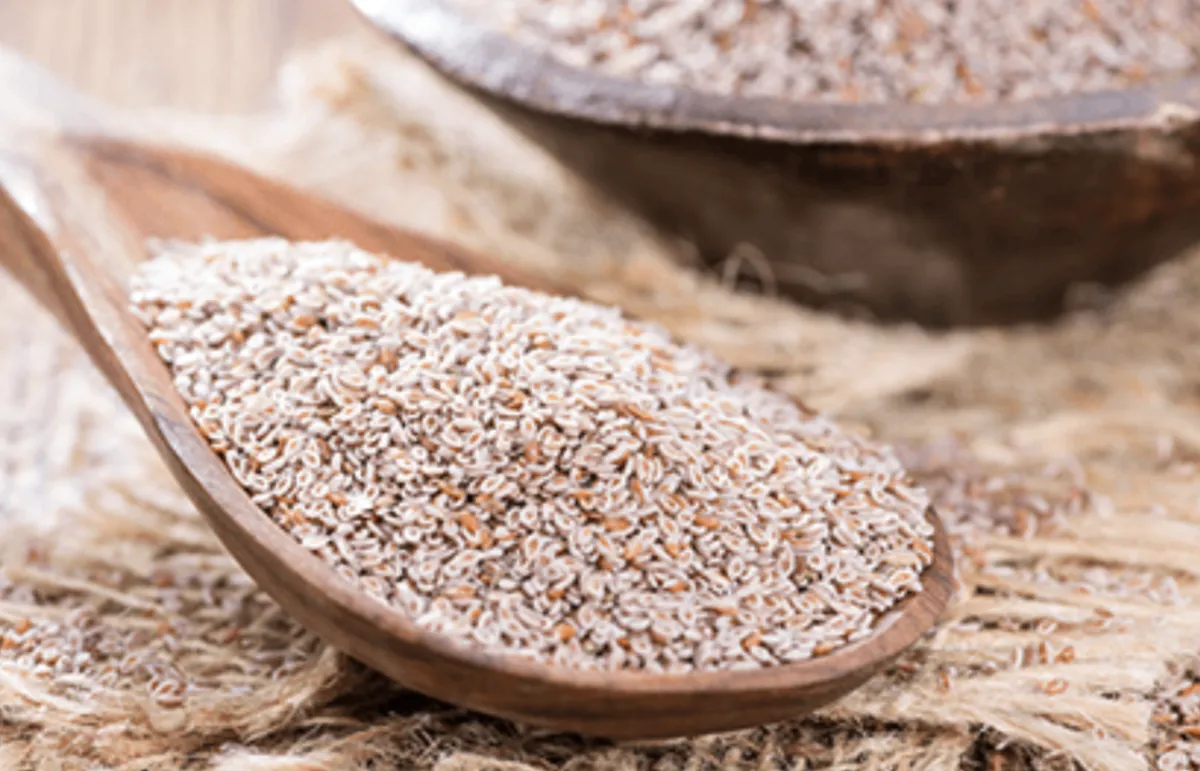
The Easiest Health Upgrade You’re Not Using
Now that we've (I hope) convinced you that your protein intake needs to increase, let's talk about another nutrient that most people are lacking....
Fiber.
Ideally, we'd get plenty from a variety of fiber-rich plants. But if that's not happening,psyllium is one of the simplest, most effective ways to fill the gap.
It’s been studied for everything from improving digestion to regulating blood sugar and cholesterol. Most people tolerate it well when they ease into it.
You might even have a dusty canister of Metamucil hiding in the back of a cabinet.
The powders come in berry or orange flavors, meant to be mixed into a glass of water, or stir the unflavored version into a cup of coffee or other liquid. (it may taste a bit gritty, or become jellylike if it sits too long)
Why it's worth it
Heart health Psyllium lowers LDL (“bad”) cholesterol, earning an FDA-approved heart health claim when incorporated into a diet low in saturated fat.
Supplementation with 10.2 grams of psyllium daily over at least 3 weeks significantly reduced LDL cholesterol, non-HDL cholesterol, and apoB, a heart disease risk marker.
Satiety and blood sugar Psyillium slows digestion, taming glucose spikes, so you feel full longer. Improved insulin sensitivity leads to fat loss and lower blood sugar.
It's how GLP-1 drugs like Ozempic and Wegovy help people lose weight.
A recent meta-analysis of 6 studies found that people who took roughly 10.8 grams of psyllium daily (about 2 teaspoons, twice a day before meals) lost nearly 4.5 pounds and trimmed an inch off their waists without changing their diet or exercise.
Bowel health Psyllium still shines in its original role: in the bathroom. Its gel softens hard stools and soaks up water if they're loose, acting as a gentle, natural stool “normalizer.”
It’s a first-line recommendation for IBS, diarrhea, constipation, and even fecal incontinence.
Consumer Lab's top pick is this and recommends:
For heart health:1 tablespoon of whole husk or 1 teaspoon of husk powder at least twice daily with meals (preferably larger meals), amounting to at least 7 grams of soluble fiber daily.
For fullness/satiety, Serving sizes are up to double those for heart health but should be taken shortly before or with meals.
Most products list a “standard” serving of psyllium as 10–15 grams, which works out to about two teaspoons of powder. That’s a reasonable target for general digestive health and regularity.
Many clinical studies have found benefits for cholesterol and blood sugar at doses of 20 to 30 grams daily.
Start low, go slow
Allow your system to adjust to the increase in fiber. Begin with ½ teaspoon once a day, and increase every few days.
Over 1–2 weeks, most people can comfortably reach the standard serving, then decide whether they want to go higher based on their goals and how their body responds.
A few considerations
⚠️ Mix psyllium with at least 8–12 oz of water, and drink more water afterward. It needs water to work.
⚠️ The most common side effects, especially when starting or increasing the dose, include gas, bloating, or looser stools. These usually settle down as your body adapts to the extra fiber
⚠️ Take medications at least 1 hour before or 4 hours after psyllium to avoid interference with absorption.
⚠️ Rarely, allergic reactions can happen, especially in people with asthma.
Psyllium is widely considered safe, but it’s always a good idea to ask your doctor before starting a new supplement.
For most people, it's an easy, inexpensive way to support digestion, blood sugar, cholesterol, and overall gut health.
Just start low, go slow, and drink plenty of water along the way!
