Nobody Thinks About Tendons...Until One Breaks
Last week a client mentioned her tendinitis and said, almost apologetically, "I know I should rest and ice it....."
I had to stop her right there.
The instinct to rest it, ice it, protect it, is understandable. It's also, according to current research, pretty much backwards.
Tendons like heat. They like movement.
They respond particularly well to isometric exercise.
I learned a lot about tendon health in a recent article and in watching the free physical therapy assessments we recently hosted.
First, let's talk about what tendons are...
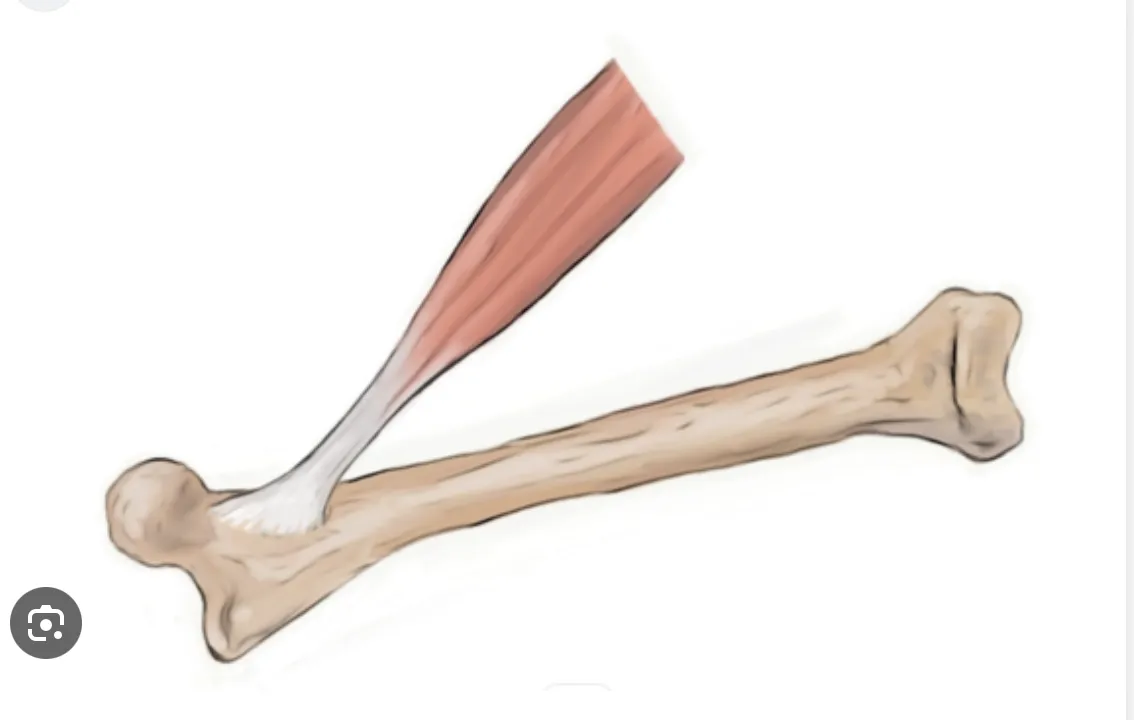
Your body has about 4,000 tendons connecting more than 650 muscles to 206 bones. When a muscle contracts, the tendon stretches, pulling the bone from where it is to where you want it to be. That's how movement happens.
Tendons are made of collagen fibers that thicken in response to resistance training. Unlike muscles, which bulk up with exercise, tendons get more tightly packed, increasing their stiffness and improving their ability to transfer force.
The problem is that tendons are slow to adapt and easy to overload.
They change significantly with age.
What Happens As We Get Older
After 30, collagen synthesis slows down. You see it in skin and hair. In tendons, it shows up as reduced elasticity and less organized collagen fibers. Instead of running parallel to each other, which allows the tendon to stretch and recoil efficiently, the fibers become more chaotically aligned.
The result is a tendon that's less able to transfer force effectively, and more vulnerable to acute injuries and chronic overuse.
The good news is that staying active can slow or even reverse this process. Buthowyou load the tendon matters enormously.
Acute injuries occur when there’s a mismatch between the force of a muscle contraction and the tissue’s ability to stretch.
If the tendon is too stiff, the muscle takes the hit. Picture a sprinter trying to beat an opponent to the finish line. They take an extra-long step at the end, and instead of breaking the tape they tear a hamstring. If the tendon can’t match the force of the muscle, it gives way.
Chronic injuries are the result of accumulated stress over time without recovery. Whether that stress is caused by high loads or high repetitions, the tendon isn’t stiff enough to effectively transfer load from the muscle to the bone. Chronically overworked and under-recovered tendons develop tendinopathies, areas of the tendon where the collagen is no longer directionally aligned.
Why Isometrics Are the Secret Weapon
Here's the challenge with injured or aging tendons: the stronger, healthier parts of the tendon take on the load, bypassing the weaker, damaged areas. Those areas never get the stimulus they need to heal and remodel.
That's where isometric exercise comes in.
Isometric exercise is movement with no movement. You hold a position under load until near-failure. Visualize holding the bottom of a squat or pushup.
If you hold long enough, the strongest parts of the muscle-tendon complex fatigue, which forces the weaker tissues to finally kick in. That's the stimulus the damaged tissue needs.
Go here to watch Keith Baar, Ph.D., a professor of molecular exercise physiology at UC Davis, demonstrate isometric holds:
30-second holds with a lighter load
10-second holds with a heavier load
Three times a week, either before your regular workout or separately
You don't need a lot of weight. You need enough challenge that the tendon has to work while staying at a pain level of zero to one or two at most.
What About Tendinitis Specifically?
The advice is no longer to rest and ice. In chronic tendon issues like tendinitis, rest allows the disorganized collagen fibers to stay disorganized. Movement--the right kind of movement--guides the tissue to remodel properly.
Heat increases blood flow to an area that already has poor circulation. Ice restricts it.
For tendons, warmth before activity is more helpful than icing after.
A Few More Things Worth Knowing
Tendons respond to collagen-supporting nutrients, specifically glycine and proline, found in chicken and turkey (including the skin, for once), seafood, and legumes. Vitamin C, copper, and zinc also support healthy connective tissue.
If you've had tendinitis, a rupture, or chronic tendon pain, keep in mind that the best predictor of a future tendon injury is a previous one.
Tendons do as much work as the muscles that move them.
They deserve some attention, too.
