There's a New Sunscreen Trend.....NOT the One You'd Expect!
One of our clients recently asked me to write about sunscreen. Perfect timing, because a new sunscreen ingredient was just approved for use in the U.S. for the first time in more than 25 years.
But that's not the biggest sunscreen story right now.
Young people are going back to tanning — in tanning beds and in the sun, while tracking peak UV levels to burn or tan their skin as quickly as possible.
It’s being called “tanmaxxing.” Influencers are tracking the UV Index, intentionally tanning during the hours dermatologists recommend avoiding. TikTok has seen a wave of young "tanfluencers" chasing the darkest possible tan.
Many aim to tan specifically during “very high” UV index levels, even though health officials advise protecting skin any time the index hits 3 or higher.
Some are even making homemade "sunscreens" from coconut oil and other kitchen ingredients, claiming they’re more effective. They aren’t. Homemade sunscreen recipes routinely fail to reach even an SPF of 6. Dermatology organizations have repeatedly advised against using them.
One dermatologist who treats thousands of skin cancer patients each year warned that young people are setting themselves up for the same regret his older patients feel.
What’s especially frustrating is that this is happening at the same time sunscreen science is getting even better.
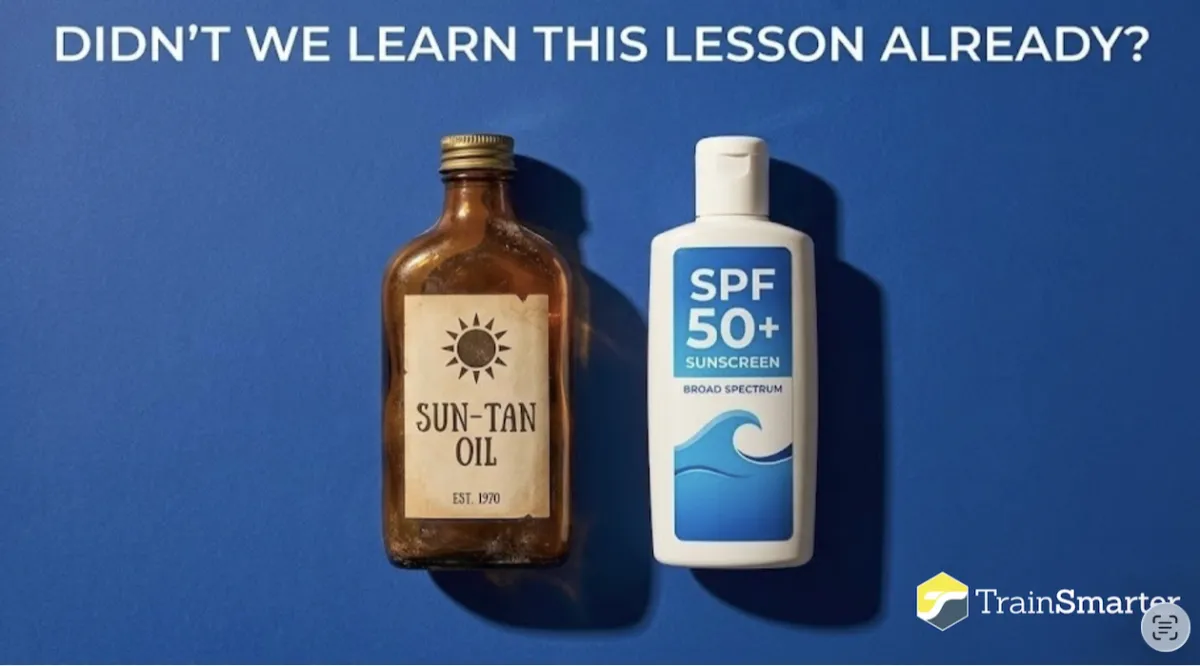
Didn’t We Learn This Lesson Already?
I remember the appeal of a tan. I spent some time “laying out”—my saving grace was that I didn’t have the tolerance for lying there with the sun so bright I couldn’t read or do anything but be bored. What no one knew back then is that there’s no such thing as a “safe” tan, and no “base tan” protects your skin from future damage.
My mom used to tell me to cover up and wear sunscreen. I didn’t listen as much as I should have, and decades later, my skin shows the evidence of it. I wish my rebellious streak hadn’t overridden her wisdom.
I think about this every time I look out the window on a sunny day and see young women walking through the parking lot, dressed to expose as much skin as possible to the sun at the worst time of the day.
The concerning part isn’t just younger generations repeating old mistakes; it’s that sun-safety messaging is getting drowned out by “tanfluencer” content.
A recent dermatology association survey found that most Gen Z respondents got their sunscreen misinformation online. Over a third named social media influencers as their primary source of skincare advice — more than any dermatologist or medical source.
Now For the Good News….
Fortunately, sunscreen technology is getting better, not worse. The FDA hadn’t approved a new UV-filtering ingredient in over 25 years until recently, when it cleared a compound called bemotrizinol.
Bemotrizinol is a broad-spectrum filter, meaning it protects against both UVB rays (the ones that cause sunburn) and UVA rays (the ones responsible for premature aging, i.e., dark spots and wrinkles).
It sits on top of the skin's surface and doesn’t absorb into the bloodstream as readily as older chemical sunscreens, making it a great alternative for the sunscreen anxious.
It’s been used for years in Europe, Australia, and parts of Asia. Several clients have mentioned preferring the sunscreen they buy on their European travels.
Bemotrizinol is particularly effective against UVA rays. It spreads easily and doesn’t leave the chalky white cast that mineral sunscreens can leave behind.
Manufacturers can start using Bemotrizinol beginning in August, with products showing up on shelves in late summer or early fall.
Look for the brand name PARSOL Shield. If you prefer chemical sunscreens, it’ll likely be an upgrade. Mineral sunscreens (zinc oxide or titanium dioxide) are still an excellent choice.
Chemical vs. Mineral: What’s Your Choice?
Every sunscreen relies on one of two approaches.
Mineral (or “physical”) sunscreens use zinc oxide or titanium dioxide, sitting on top of the skin like a shield and deflecting UV rays. Mineral filters aren’t absorbed into the body and are considered safe by the FDA. But they come with trade-offs: the texture is thick, and it leaves a white cast, a common complaint for people with deeper skin tones.
Chemical sunscreens use ingredients like avobenzone or octocrylene, absorbing UV radiation and releasing it as a small amount of heat. Chemical filters solve the texture problem, but the FDA found that they can be absorbed into the bloodstream. It’s unclear whether that has any health effects. The evidence doesn’t suggest the risks outweigh the sun-protection benefits.
Because they’re thick and more difficult to apply, mineral sunscreens often don’t perform in independent testing as well as their labels suggest, while chemical formulas spread more easily. Mineral sunscreens aren’t a bad choice—they just need to be reapplied generously and consistently.
The “perfect” sunscreen is the one you’ll wear—and apply enough of it.
Most people apply somewhere between 20 and 50% of the amount they need. For full-body coverage in a swimsuit, that’s roughly a full shot glass worth of sunscreen, reapplied at that same amount every two hours, more often if you’re sweating or swimming.
One thing thatisa bad choice, no matter how it’s trending online: making your own sunscreen at home with ingredients like coconut oil or shea butter. Homemade recipes have been tested and consistently fail to provide anywhere near adequate protection, landing around SPF 6, if that.
A tan isn’t a “glow-up.” It’s a distress signal that DNA damage has occurred.
A Few Things Worth Knowing
SPF 30 is enough. It blocks about 97% of UVB rays; SPF 60 bumps that to roughly 98%. No sunscreen blocks 100%, and going higher than 30 offers diminishing returns. The greater factor is application amount and frequency.
“Broad spectrum” matters.SPF only tells you about UVB protection. Without a broad-spectrum product, you’d still be getting UVA damage — the kind that shows up later as wrinkles, dark spots, and increased cancer risk.
UVA rays don’t care what time it is.UVB is strongest at midday, but UVA is present whenever the sun’s up — early morning and late afternoon, and through clouds and window glass.If you’re getting sun through your car window, you’re getting UVA exposure!
“Reef safe” isn’t a regulated term. If that matters to you, look for sunscreens without oxybenzone or octinoxate (the filters with the strongest evidence of marine harm), and consider a non-nano mineral sunscreen as your most environmentally cautious option.
Sunscreen expires. Typically, it’s good for at least three years unopened, but a bottle you’re using frequently all summer often won’t last past one season. If it’s separating or clumping, it’s time for a new one.
Cover up when you’re not wearing sunscreen. A hat can help, but you can still get reflected sunlight. Avoid wearing a visor in the sun! I know too many people who’ve had skin cancer on the top of their head—the spot the visor didn’t cover.
I also recommend UPF clothing, like SunShade or Coolibar. I throw on my Sunshade cardigan when I walk across our parking lot in the intense midday sun.
What I’d Tell My Younger Self
What I know now that I wish I’d known then is: using sun protection will do more for your skin in ten years than any amount of “getting some color” will do for you today.
It’s the ultimate long-term skincare hack.
The expensive serums, retinol, and treatments influencers sell you to fix dark spots, redness, and premature wrinkles down the road? You can skip most of them just by using a good broad-spectrum shield today.
And if you're the version of me that's still out there chasing a tan….
I hope you’ll believe me a little sooner than I believed my mom.
