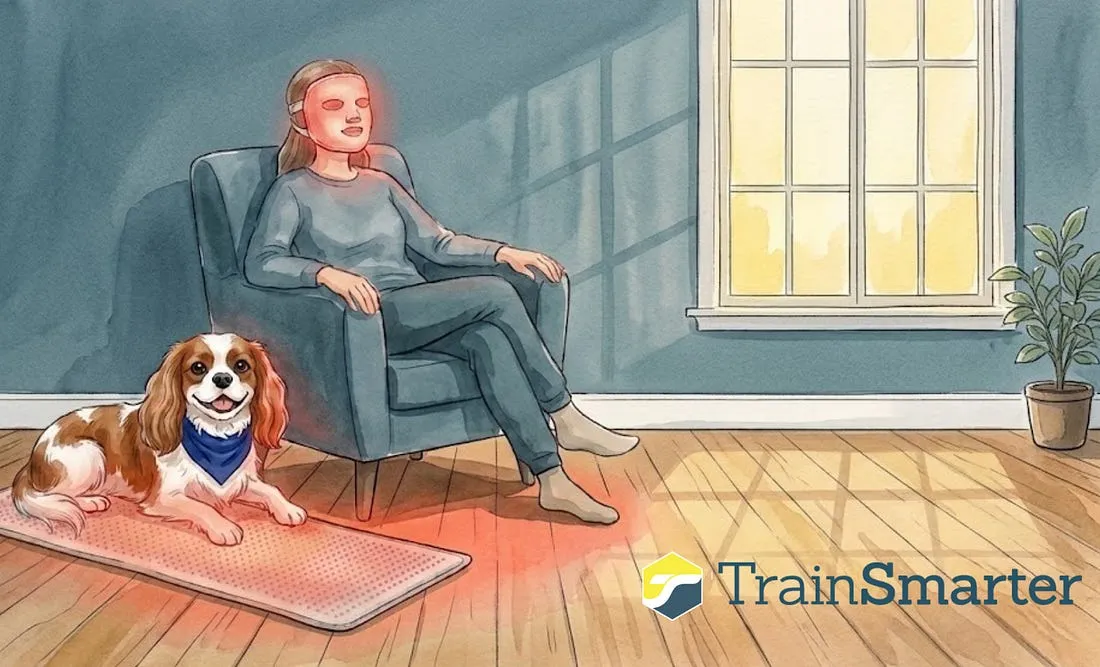
Does Red Light Therapy Work?
If someone told you that shining a light on your face could help your skin look younger, would you believe them?
The beauty and wellness industries are full of products that promise to turn back the clock. Some deliver. Some deliver little more than a lighter wallet.
There are now red light options for your pets and red light toothbrushes! Before you roll your eyes, as I just did, you might want to check this out…
We offer red light therapy, and one of the questions we often hear is, "Does it work?"
The evidence was good enough that I found it worth investing in the light panel, particularly once I heard dermatologists were using it in their offices. There’s compelling science behind it, more convincing in some areas than others.
A 2025 consensus statement published in the Journal of the American Academy of Dermatology concluded that red light therapy is safe for adults and doesn’t cause DNA damage.
My experience: an N of 1
I’d classify myself as a skeptical early adopter. As with collagen, I’ve been skeptical, yet I religiously use red light on my face for 10 minutes most nights.
I always look for clinical evidence before recommending anything. This is simply my experience, not a scientific study. In the wake of my fall in August, people have remarked on how I healed so quickly. I had gashes on the side of my face that were held together with steri-strips (that would likely have been stitched if I’d gone to the hospital immediately), and of course, there’s the area under my eye that was the site of two surgeries.
Yet people tell me they’d never have believed that I’d experienced such a dramatic and traumatic accident if they hadn’t seen my appearance after the fall.
Maybe they’re just being nice.
Or maybe the red light played a part.
Or maybe it was the good medical care, the steri-strips, and the other healthy habits I have working for me.
Again, my experience is not a clinical trial. Here’s what we know now.
How light therapy works
Unlike ultraviolet light, which can damage skin, red and near-infrared light are used at relatively low intensities and are not intended to work by burning or heating tissue (i.e., not like a laser).
It all comes down to wavelengths and cellular stimulation:
Red light: for wrinkles and scarring
As skin ages, collagen and elastin, the proteins that help give skin its structure and elasticity, change. Sun exposure, genetics, and the passage of time all contribute to wrinkles and changes in skin texture.
When certain wavelengths of red light penetrate the dermis (the deeper layer of your skin), they stimulate specialized cells called fibroblasts. Fibroblasts produce collagen and elastin, the primary structural proteins that keep skin firm, smooth, and resilient.
Red light may also influence mitochondrial activity and other cellular processes involved in tissue repair.
Small clinical studies have reported improvements in measures such as skin texture, elasticity, and the appearance of fine lines.
How significant is the improvement? Dermatologists interviewed by NPR described the effect as modest compared with more aggressive in-office treatments.
Blue light: for acne
While red light targets deeper layers, blue light works closer to the surface. It targetsthe bacteria responsible for acne by activating compounds inside the bacteria, causing them to self-destruct. It also helps regulate oil production and calm inflammation, which red light can also reduce.
Blue light is better studied for acne than red light is for wrinkles, but the studies were relatively small, and the devices and treatment protocols differed. Blue light therapy may be a useful addition to an acne treatment plan.
Near-infrared Light
The light units I have at home and at TrainSmarter also provide near-infrared light. Near-infrared light reaches deeper than red light and is being studied for its potential effects on inflammation, pain, and tissue repair.
Often used for deep muscle recovery and joint stiffness, research also shows it can address hair loss on the scalp (no, it won’t cause growth of facial hair. Facial skin reacts differently than the scalp!). You may have seen red light caps for sale at Costco.
A 2026 review of clinical studies examined red and near-infrared light treatment for burn scars, thickened scars, and postsurgical scars. Across seven studies involving 297 people, the researchers found encouraging results for some measures of scar appearance, thickness, and flexibility, and the treatment was generally well tolerated.
Seven studies involving fewer than 300 people aren’t enough to establish a reliable treatment protocol for every kind of wound or scar. The researchers called for larger, better-designed trials.
Other research into wound healing has also been promising, but results vary according to the type of wound, the light used, and how treatment is delivered. There are lots of variables.
What to look for in a device
If you’re considering red light therapy, be aware that not all red lights are created equal.
When comparing devices, look for FDA-cleared units that list their nanometer wavelengths.
Effectiveness depends almost entirely on thenanometer (nm) wavelength:
Red Light: Needs to be between 633–670 nm to reach the dermis and stimulate collagen.
Near-Infrared Light: Needs to be between 808–830 nm for deeper tissue penetration and inflammation reduction.
Blue Light: Needs to be around 415 nm, although clinical studies have evaluated a range of wavelengths.
In other words, sitting near a red party bulb or a heat lamp won’t do anything for your skin.
When comparing devices, look for FDA-cleared units that list their nanometer wavelengths.
While red light therapy has a good safety record in adults, it isn’t for everyone. Studies have been in adults, so the risks for children aren’t known. People with conditions that make their skin sensitive to light, such as lupus, or who take medications that increase light sensitivity, should check with their doctor before using it. Follow your device’s eye-protection instructions, and if you see a dermatologist, ask how it fits with what you’re already doing.
How to use it for the best results
To see benefits from light therapy, keep these three rules in mind:
Consistency: A single session once in a while won’t yield noticeable results. Like exercise, the benefits of light therapy compound over time with regular use. I suspect that red light masks became popular because you can wear them and still go about your business….in private, unless it’s Halloween….
Start with clean skin: Always remove makeup, lotion, and SPF before a session so the light wavelengths can penetrate without barriers.
Watch your skincare timing: If you use wrinkle-fighting ingredients like retinol, wait a few hours between your light therapy session and applying any product to prevent potential skin irritation.
When do you see results?
Changes in collagen and tissue take time. While some people notice a subtle “glow” or reduced redness early on, most of the clinical studies evaluate results at 6 to 12 weeks of consistent use.
So, does red light therapy work?
Here’s how I’d summarize the evidence.
Fine lines and skin texture: promising, but the size and consistency of the benefit remain uncertain, especially with at-home devices.
Mild to moderate acne: encouraging clinical evidence supports certain red and blue LED devices as potential treatment options.
Wound healing and scars: interesting early clinical evidence, but not enough to make broad promises about healing speed or scar prevention.
Pain, inflammation, hair growth, and other uses: each requires its own evidence. A result in one area doesn’t guarantee effectiveness in another.
To be clear, red light therapy isn’t one treatment with one outcome. It's a family of approaches that use different wavelengths, doses, and devices for different purposes.
Asking whether it works is a little like asking whether exercise works. We need to be specific about what we're trying to accomplish and how we're going about it.
Light therapy isn’t a quick-fix miracle, but used correctly with the right wavelengths and daily consistency, it could make a difference.
Just remember: consistency is everything.
Based on my experience and the research so far, I’d say red light is a low-risk, non-invasive tool worth exploring,
Just remember… I’m an N of 1!
