Rethinking the Calcium Pill
A client in our SPIRE bone density program asked me recently if I take a calcium supplement. I told her my choice: after reading about the research on calcium and arterial calcification, I’d gotten a little scared away from it, though I was careful to say that my choice wasn’t advice for her specifically.
She responded, “I just can’t eat enough calcium-containing foods!”
The two of us aren’t the only ones wrangling with this question.
Just a few decades ago, calcium supplementation was a widespread concern—a lot like protein is today. It’s still a $6.4 billion industry, probably because "take a calcium supplement" has become ingrained into the way we think about bone health.
But studies suggest that most healthy people are buying a pill that isn't doing much for them. Supplements might help people at high risk of fracture or osteoporosis, but we don’t know that for sure.
Do you need extra calcium?
Researchers analyzed 69 trials covering nearly 154,000 adults and found little to no benefit from taking calcium, vitamin D, or a combination of both to prevent falls and fractures in a generally healthy population. Most people in these trials were older adults who weren’t deficient, at elevated fall risk, or on osteoporosis medication, an average, healthy group.
It appears that supplementing helps if you’re deficient. If you’re already getting enough calcium from food, there’s no gap for a pill to fill, which could explain why no benefit showed up in the study.
But for some people….
People with bone disorders, including those being treated for osteoporosis, can be at higher risk for falls and fractures, and the research may not apply to their situation.
Bone and muscle mass naturally decline with age, which can affect balance and gait. Women tend to lose bone density earlier and faster than men, thanks to hormone changes around menopause. About 80% of the roughly 10 million Americans with osteoporosis are women. Genetics, family history, and prior injuries all play a role, too.
That means it’s important to know whether calcium supplements are appropriate for you. That’s a conversation for you and your doctor.
Why not take them “just in case…?”
Calcium from food and calcium from a pill aren’t the same
Did you know that your body doesn’t treat dietary calcium and supplemental calcium the same way?
Dietary calcium: A large study that tracked people for about 20 years found that people who got themostcalcium from their diet had less calcium buildup in their arteries than people who ate the least — the opposite of what you’d think.
Food delivers calcium in small, steady doses throughout the day, along with other nutrients that help your body absorb it properly. Dietary calcium may help lower blood pressure by supporting healthy blood vessels.
Supplemental calcium: Some studies have found a link between higher-dose calcium supplements, particularly at 1,000 mg a day or more, and increased artery calcification or cardiovascular events.
Other studies have found no link at all, and nobody fully understands why. One theory is that calcium your body can’t immediately use for bone may get deposited in blood vessel walls instead.
So where does that leave you?
Right now, the evidence isn’t strong enough to call supplements dangerous, but it’s not strong enough to eliminate concern.
At any rate, food-based calcium is the version with zero downside risk.
Food first: reaching your daily calcium target
Food sources provide a safer, more effective way to satisfy daily requirements.
Official guidelines recommend 1,000 mg dailyf or most adults aged 19–50 (and men up to age 70) and 1,200 mg daily for women aged 51 and older (and men 71+).
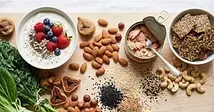
Foods providing significant calcium include
Dairy: Milk, Greek yogurt, kefir, cottage cheese, and hard cheeses.
Leafy & Green Vegetables: Dark leafy greens, broccoli, and edamame.
Canned Fish with Bones: Sardines and wild canned salmon.
Fortified Options: D-fortified plant milks and pasture-raised egg yolks.
Most people fall a bit short of these targets, averaging closer to 875 mg a day. I imagine that’s the case for me, too. I snack on Greek yogurt and cheese to try to close the gap, but there is another fantastic source many people overlook...
The power of seeds
When people think of calcium, they usually imagine dairy or leafy greens. But tiny seeds, especially sesame and chia, are absolute powerhouses. Just two tablespoons of unhulled sesame seeds pack around 180 mg of calcium, making them one of the most concentrated plant-based sources you can eat.
If you’re wondering how to incorporate them into your routine beyond sprinkling them on a salad, making a quick batch of seed crackers is a game-changer. They take little prep time, use simple pantry staples, and give you a satisfying, crunchy snack to pair with Greek yogurt dips or canned salmon.
👉Try it out: Check out this quick guide to making your own high-calcium seed crackers at home.
If you choose to supplement, avoid megadoses
People diagnosed with severe bone loss, certain bone disorders, nutrient malabsorption, or those under medical supervision for osteoporosis may need prescribed supplementation.
Just remember—more isn’t always better.
Taking too much calcium can cause brain fog, stomach pain, nausea, and constipation, and in more serious cases, kidney stones or kidney strain, as your body works overtime to get rid of the excess. It’s easy to accidentally overdose, since lots of multivitamins contain calcium and vitamin D.
Inventory what you’re getting in a typical day to determine whether you need supplementation, and if so, how much.
Bones can’t be built in the kitchen…..
While diet provides the building blocks, mechanical load is what sets bone growth and repair in motion. To build bone density and prevent age-related decline, the right kind of movement is critical:
Impact & multi-directional movement: Jumps, hopping, and multi-directional footwork signal bone-building cells to build more density.
Resistance & weight-bearing exercises: Strength training places tension on muscle-to-bone attachments, stimulating bone remodeling.
Agility & reactive balance: Quick direction changes and balance drills build joint stability and reduce fall risk, the biggest cause of fractures in older adults.
… but you can supply the building blocks there
Calcium from food is your safest, most effective approach. If you can’t hit your target through diet, talk with your doctor about how to supplement the difference without overdoing it.
By adding a few calcium-dense foods to your regular rotation, you can hit your targets while saving yourself from the unresolved questions surrounding high-dose pills.
