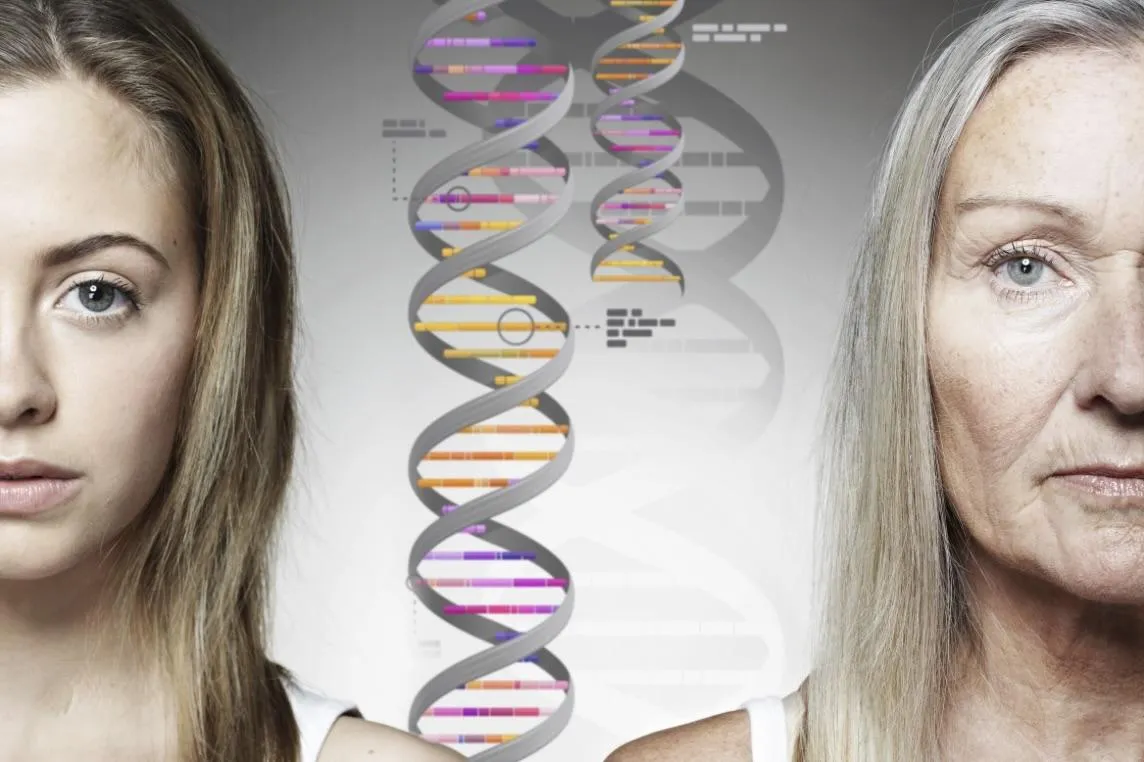
New Research on How Much Your Lifespan Is Determined By Your Genes
We’ve all heard the stories.
The martini-drinking, chain-smoking centenarian.
The fit, health-conscious person who dies far too young.
It leaves us wondering: How much of this is up to us… and how much was written in our DNA from the start?
New research published in Science suggests genetics may play a bigger role than we once thought.
The study estimates that about 50–55% of lifespan is influenced by genetics--more than double previous estimates of 20–25%.
That's a bit discouraging to someone like me, who's only a couple of years away from the age my dad died.
What the study found
Researchers re-analyzed data from twin studies in Sweden and Denmark, along with information on U.S. centenarians and their siblings.
Twin studies are helpful because identical twins share nearly 100% of their genes, while fraternal twins share about 50%. Comparing their lifespans helps scientists estimate genetic influence.
Here’s the key twist:
The researchers focused specifically on “intrinsic mortality”— deaths caused by internal, age-related processes (i.e., heart disease or cancer).
They excluded “extrinsic mortality” (deaths from accidents, infections, and other external causes).
A century ago, infectious diseases like tuberculosis were common causes of death. Today, thanks to sanitation, antibiotics, and vaccines, those deaths are far less frequent. In our modern world, where fewer people die from infections or accidents, the role of genetics becomes more obvious.
Genes may account for about half of lifespan.
But the other half is influenced by lifestyle, environment, healthcare access, socioeconomic factors, and something researchers call biological randomness.
Longevity isn’t fully scripted.
Even identical twins, raised in similar environments, don’t age in exactly the same way. Tiny day-to-day biological differences--how your immune system clears damaged cells, how your body responds to stress, your level of inflammation--accumulate over decades.
That’s where your habits come in.
It’s Not Genes or Habits--It’s Both
The study’s author put it this way: if your genetics “encode” a lifespan of 85 years, your daily habits might add five to eight years — or subtract five to eight years.
The greater issue isn't just about length of life--quality of life is even more important.
Genetics set a range, but these habits influence where you land inside it:
Move your body.
Aim for at least 150 minutes of moderate exercise per week. Add intensity for even greater results--it doesn't take a lot!.
Don't skimp on sleep.
These sleep habits could add 1.5-3 years to your life expectancy:
Getting 7-8 hours per night
Falling asleep easily
Staying asleep
Waking rested
Maintaining a consistent sleep schedule
Eat wisely.
Higher intakes of fruits, vegetables, whole grains, nuts, legumes, and healthy fats are associated with healthier aging. Diets high in processed meats, trans fats, sodium, and sugary drinks trend in the opposite direction.
Stay connected.
Strong social ties buffer stress and are linked to slower biological aging.
Regulate stress.
Mindfulness, time in nature, moments of awe, and deliberate recovery shift the nervous system out of chronic fight-or-flight. Over time, that reduces inflammation, strengthens immunity, and supports cardiovascular and emotional health.
We don’t control everything, but we’re not powerless, either.
I'm not a gambler. I'm someone who strives to live without regrets.
I'm taking the safer bet—staying strong and active, sleeping well, eating thoughtfully, and maintaining connections.
However long the story turns out to be, I want it to be a good one!
