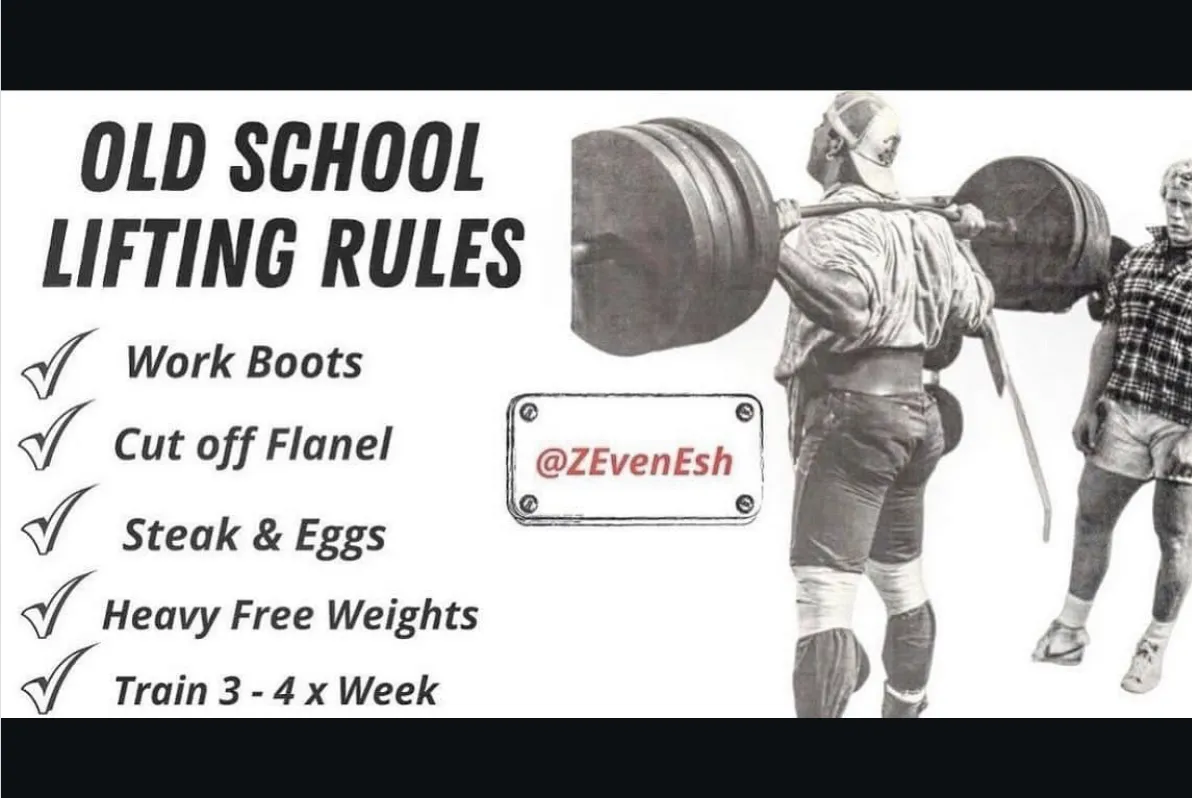
New Rules: Strength Training Rules Updated For The First Time In 17 Years
We've all heard it. Maybe from a well-meaning friend or a skeptical spouse:
"Why do you need a trainer? Can't you just go lift some weights? I've been working out for years. I know what I'm doing."
Exercise seems simple. Pick things up, put them down. Walk, run, repeat. How complicated can it be?
The reality is that exercise science changes as fast as nutrition or medicine. What we "knew" to be true 10 years ago is constantly being refined.
And the science continues to evolve.
The American College of Sports Medicine just published its most comprehensive update to resistance training guidelines in 17 years.
They synthesized 137 systematic reviews covering more than 30,000 participants to answer one simple question: What's proven to work?
The results prove that having a professional in your corner isn't about "paying for a workout." It's about applying the most current science so you don't waste your time....or hurt your back.....
The New Rules
Lifting to failure isn't necessary and maybe counterproductive. Lifting "to failure" is no longer the goal. The researchers found that training to failure doesn't consistently enhance strength or muscle size and it increases injury risk. The sweet spot is stopping with 2-3 reps still in reserve.
The lowering phase matters--a lot! Most people rush through the "down" part of a squat, press, or row to get back to the "up" part without realizing that's a significant portion of the muscle-building stimulus. Slowing that eccentric phase to 3-4 seconds produces a much greater muscle-building response. It's one of the highest-return adjustments you can make.
Full range of motion is critical.Cutting a squat short when the load gets heavy compromises workout results. Full range of motion produces significantly greater strength and muscle gains. It's why we "nag" you about squat depth and full extensions! Now we have 137 systematic reviews backing us up. 😄
Heavier loads build more strength. For strength, lift at or above 80% of your one-rep maximum, through a full range of motion, for 2–3 sets, at least twice a week.
Volume drives muscle size. For hypertrophy, total weekly volume matters more than how heavy you go. The ACSM now supports 10 or more sets per muscle group per week for muscle growth. Slowing down the eccentric contractions (lowering phase), the part most people rush, produces a significant muscle-building stimulus.
Train twice-a-week minimum. If you're currently strength training once a week, the evidence is clear: twice weekly is where strength gains become consistent and meaningful.
Count your sets per muscle group: Pick one muscle group, say, your legs or back, and count how many total sets you’re trainingper week. The research supports 10 or more sets per muscle group weekly for meaningful results.
Consistency is key. The ACSM's biggest conclusion wasn't about sets, reps, or periodization. It was that only about 28% of American adults are meeting the basic muscle-strengthening guideline of two sessions per week. The best program is the one you'll do!
Our clients don't have to read every new study. We do that for them. They just have to show up and trust that what we're asking them to do is grounded in the most reliable evidence.
When someone asks "Why do you need a trainer?" they're usually assuming the job is just counting reps or telling you to work harder.
It's not.
It's knowing when to push and when to hold back. When to adjust. When something looks fine but isn't. When you're capable of more without knowing it.
We're here to ensure you're working Smarter.
The science just got its most significant update in 17 years.
We've already read it. 😉
