Train Smarter — This Workout Delivers More in Less Time
If your cardiovascular exercise is walking or running, you'd benefit greatly from mixing it up.
Zone 2 training,moderate-intensity aerobic work (60–70% of max heart rate) for 30–45 minutes at least 3 times per week, is a good foundation.
BTW--Most walkers aren’t doing that. They're strolling.
I get my Zone 2 on Sundays, walking hills in my daughter's neighborhood, and Saturday's 4-mile walk/run.
My favorite run, and the one that feels like it makes the most difference, is Tuesday's sprint workout.
Sprint work is powerful and accessible to all.
Think sprinting is just for athletes? Think again.
Sprint Interval Training is built on short bursts of all-out effort (10–30 seconds), followed by full recovery (2–4 minutes).
Sprint. Rest. Repeat. That's it!
A meta-analysis of 75 studies compared Sprint Interval Training (SIT), High-Intensity Interval Training (HIIT), and continuous cardio (running or cycling).
SIT produced 91.8% more fat loss than continuous cardio
39.5% more fat loss than HIIT
and SIT workouts took 71% less time than continuous cardio
Why it works:
Activates fast-twitch muscle fibers.
Boosts growth hormone and afterburn (EPOC)
Keeps cortisol low (unlike long cardio)
Promotes fat loss without burning muscle
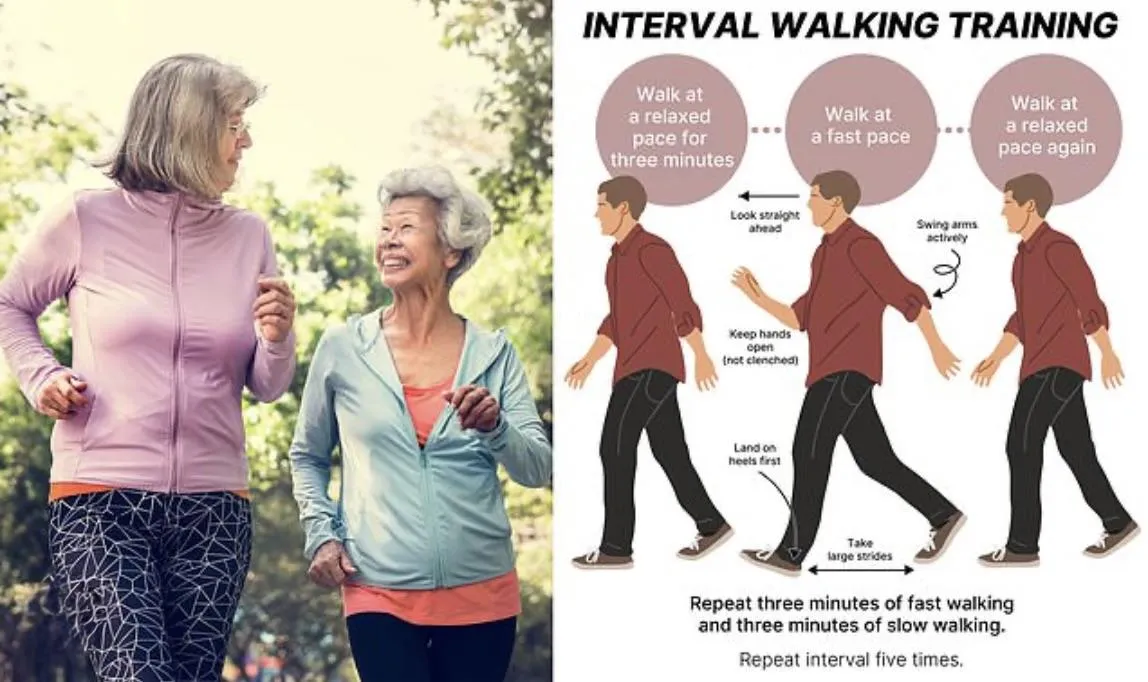
👉 You don't have to be a runner. If you're a walker, make your sprint interval a fast walking or easy running interval.
The 10-Week Sprint Protocol
Weeks 1–3: 10-Second Sprints
Week 1: 4x10s, 4 min rest
Week 2: 6x10s, 3 min rest
Week 3: 8x10s, 2 min rest
Weeks 4–6: 20-Second Sprints
Week 4: 4x20s, 4 min rest
Week 5: 6x20s, 3 min rest
Week 6: 8x20s, 2 min rest
Weeks 7–10: 30-Second Sprints
Week 7: 4x30s, 4 min rest
Week 8: 4x30s, 3 min rest
Week 9: 4x30s, 2 min rest
Week 10: 4x30s, 4 min rest (3x/week)
After 10 weeks, you can maintain this 3x/week structure for 3–4 weeks, then deload before restarting.
I stick to one sprint day a week--endurance is my weak link--but just one day is incredibly effective. We run a short distance to a street near my house, do the sprint repeats up and down that street, then run back.
Why sprinting works so well
Shorter Workouts = Better Consistency
You’ll stick to it because you know it’ll be quick and easy. It's the one run I don't dread, and it fatigues my legs less than my 3-mile Thursday run!
Full Recovery = Less Burnout
SIT balances stress instead of compounding it.
Max Effort = Hormonal Advantage
Spikes growth hormone and testosterone, increasing fat oxidation.
Preserves Muscle
Sprinting signals your body tobuild, not break down, lean tissue.
Most people spend more time decidingwhatworkout to do than this entire session takes!
👉 You can sprint...
On a hill. On a bike. With sleds or kettlebells. Or just in your backyard.
I feel like Dr Seuss...
Hill Sprints:
Warm up 5–10 minutes.
Sprint 10 seconds uphill.
Walk down and rest 3 minutes.
Repeat 4–6 rounds.
Bike or Rower:
Sprint 15 seconds all-out.
Rest 2–3 minutes.
Repeat 4–6 rounds.
Kettlebell Swings:
20 seconds hard.
Rest 3 minutes.
Repeat 4–5 rounds.
Difficult but doable is the goal. If you need longer rest, take it.
You don’t need harder workouts. You need the right kind.
Sprint Interval Training trains your body to burn fat and build lean tissue--the holy grail of efficient training!
