I Almost Stopped Eating Strawberries... Until I Learned a Smarter Way.....
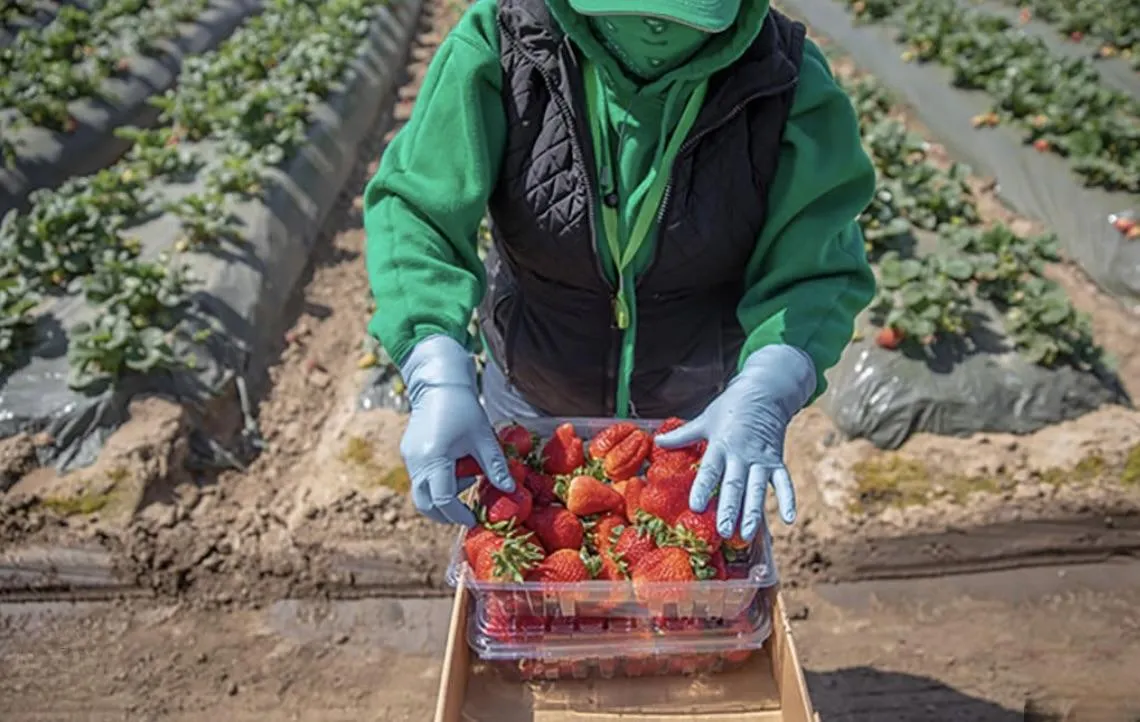
My daughter once told me about a photo of strawberry farm workers wearing what looked like hazmat suits. That gave me the “ick” about eating strawberries.
Pesticide reports can make traversing the produce aisle feel like walking through a minefield.
Before you empty your crisper drawer or blow your budget on organic berries, let’s take a look at the science.
Each year, the Environmental Working Group (EWG), a nonprofit consumer advocacy organization, analyzes USDA data and releases its Shopper’s Guide to Pesticides in Produce.
The cleanest items earn a spot on the Clean 15, while the most pesticide-heavy land on the Dirty Dozen list.
These designations often lead people to think cherries, peaches, and blueberries are off-limits.
That couldn’t be farther from the truth!
The benefits of a diet rich in fruits and vegetables massively outweigh the potential risks of pesticide exposure.
A 2024 study found that middle-aged adults who increased their vegetable intake were less frail in old age. Another study found that switching to a more nutritious diet featuring fruit may add 10 years to your life.
Goodbye strawberries? Absolutely not!
The 2026 Dirty Dozen
These are the most pesticide-contaminated fruits and vegetables of the year:
Strawberries
Spinach
Kale, Collard & Mustard Greens
Peaches
Pears
Nectarines
Apples
Grapes
Bell & Hot Peppers
Cherries
Blueberries
Green Beans
Notice that almost all of these are fruits and vegetables we eat skin and all, which is why they’re more vulnerable to pesticide residue.
A Thick Skin Helps
A look at the 2026 Clean 15 list reveals that the fruits and vegetables with the lowest pesticide residue frequently have naturally thick armor that you peel away before eating:
Avocados & Pineapples
Sweet Corn (fresh & frozen)
Papayas & Mangoes
Onions & Asparagus
Sweet Peas (frozen)
Cabbage & Cauliflower
Watermelon & Bananas
Carrots, Mushrooms, & Kiwis
Because we don’t eat the outer layer of a pineapple or an avocado, fewer chemicals—including “forever chemicals” like PFAS—ever make it to your plate. On the other hand, items like strawberries are vulnerable because we eat the skin and all.
What About Organic?
Organic produce isn’t treated with PFAS pesticides, the “forever chemicals” that are showing up in research as a growing concern, but organic isn’t a guarantee of being pesticide-free.
This year, the most PFAS pesticides were used on strawberries, consistently found on Dirty Dozen lists.
We have no evidence that organic produce is healthier than conventional.
One practical compromise: buy conventional from the Clean 15, which have lower pesticide levels, and opt for organic from the Dirty Dozen when your budget allows.
The Kitchen Sink Approach
You can dramatically reduce your exposure to residues, bacteria, and germs using things you already have in your kitchen.
Skip the dish soap: Plain old running water can do the trick. Rinsing strawberries under a cold tap for 15 to 20 seconds can slash common pesticide traces by 37%. Adding soap introduces unnecessary chemicals to your food.
The Salad Vinegar Bath:If you want to get your leafy greens extra clean and eliminate bugs like E. coli, try a quick soak. Dissolve ½ cup of distilled white vinegar into 1 cup of water, soak your greens for a few minutes, rinse with fresh water, and spin them dry.
According to the U.S. Environmental Protection Agency (EPA), having tiny traces of pesticide residue on your produce is not necessarily unsafe. Their monitoring programs regularly detect residues at levels far lower than anything considered a health risk.
Eating more produce—conventional or organic—is one of the best things you can do to manage your weight, lower blood pressure, and protect your long-term health.
Grab an avocado for a massive 14-gram hit of fiber, or a kiwi for your daily vitamin C.
It’s smart to minimize your risk. Shop selectively, wash thoroughly, and focus on getting more fresh, whole foods into your diet.
The real risk isn’t eating conventionally grown strawberries.
It’s not eating enough fruits and vegetables at all.
