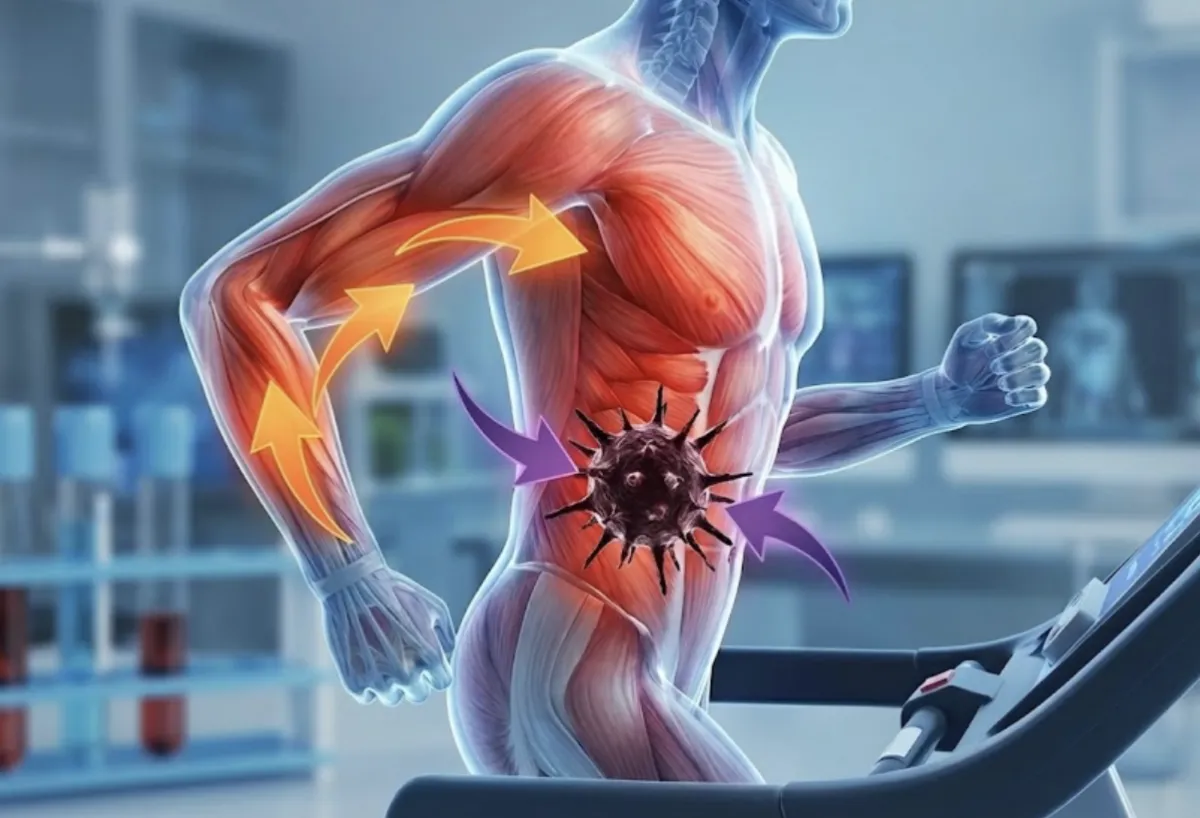
How Exercise Starves Cancer Cells
We’ve known for a long time that people who exercise regularly have a lower cancer risk.
What's the connection?
A new Yale University mouse study discovered an interesting explanation: exercise may change where your body sends its fuel, feeding your muscles and leaving cancer cells to starve.
Muscles vs. tumors: a metabolic tug-of-war
Researchers looked at mice with either breast cancer or melanoma. The mice were split into groups based on diet and activity level, and the scientists used molecular tracers to track what happened to glucose, the body’s primary fuel.
What they found was fascinating.
The mice that exercised regularly didn’t just burn more calories.
Their bodies rerouted glucose away from the tumors and toward their muscles.
Exercise shifted the metabolic priority: muscles got first dibs, and tumors were left scrambling.
After four weeks, the results were dramatic.
Obese mice on a high-fat diet who exercised had tumors that were nearly 60% smaller than mice eating the same diet but staying sedentary.
Same calories. Same diet. Very different outcomes.
Cancer cells are energy-hungry.
They rely on glucose to grow and multiply. When exercise increases the muscles’ demand for fuel, there’s less available to feed tumors.
The researchers found that tumors in active mice showed signs of metabolic stress (in 417 metabolism-related genes), reflecting survival mode rather than growth mode.
One key pathway affected was mTOR, a protein involved in cell growth and proliferation. Exercise appeared to dial this pathway down, potentially limiting tumor expansion.
It’s not “exercise cures cancer.” That’s an important distinction.
This doesn’t mean working out prevents cancer or replaces medical treatment. Cancer is complex. No single behavior is a magic shield.
But it does indicate that physical activity changes the internal environment of your body in ways that make it less hospitable to disease.
Even more encouraging, mice that exercised before tumors were introduced developed smaller tumors later.
That suggests movement may be protective long-term.
The same mechanisms appear to be at play in 2 types of tumor--exercise benefits appear to not be limited to a single cancer.
What this means for people
This was an animal study, so researchers need to confirm whether the same mechanisms apply to humans.
They’re planning follow-up studies using human tumors and exploring the question of types and duration of exercise.
The takeaway is intriguing:
Exercise doesn’t just “burn calories.”
It changes how your body allocates energy, which may keep cancer cells from thriving.
Whether it’s walking, lifting, cycling, swimming, or something else you enjoy, consistent movement sends a message to your body about what gets fueled.
Turns out, your muscles are very persuasive!
