Loneliness Is as Dangerous as Smoking or Heavy Drinking — But the Solution Is Surprisingly Simple
Last week, I was standing nearby as a personal training session was about to begin and watched one participant, a woman in her 60s, go out of her way to introduce herself to another participant, a teenaged boy she’d never met.
That moment completely reframed how I view my job.
How often do people separated by forty or fifty years stop, look each other in the eye, and connect?
In most gyms, people put on noise-canceling headphones, stare at a screen, and intentionally ignore the human beings right beside them.
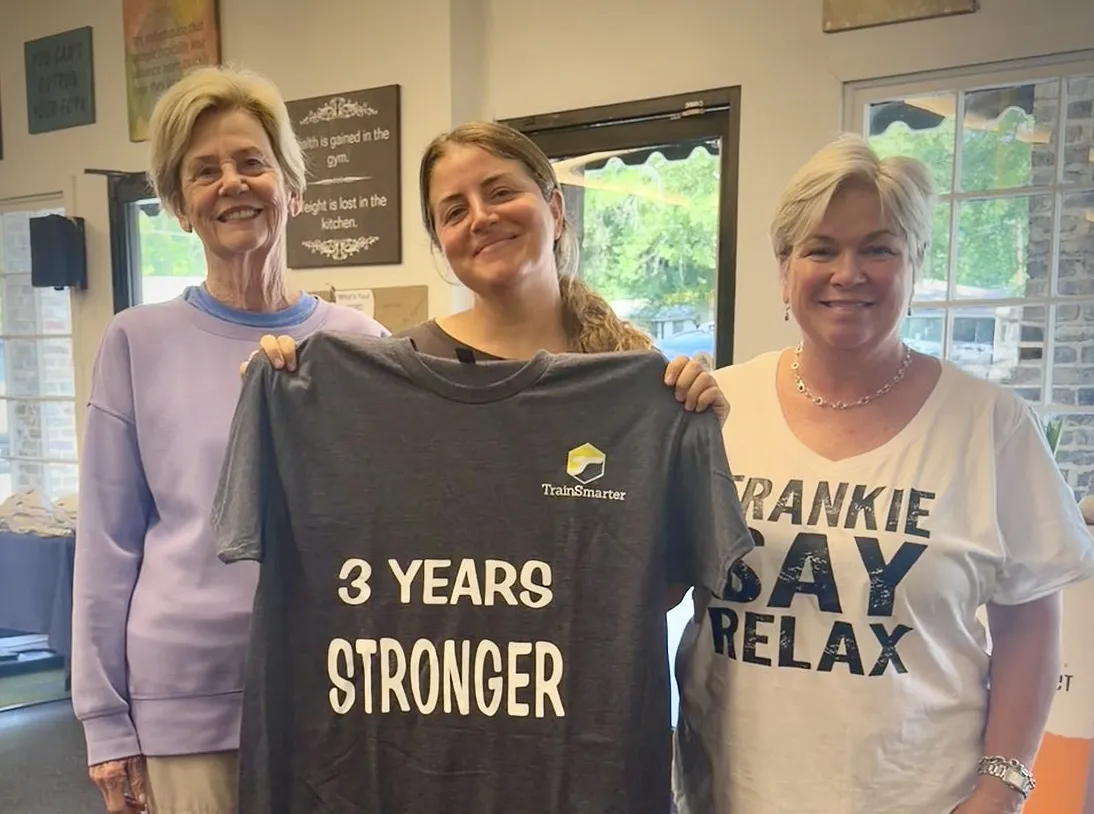
But at TrainSmarter we have 30 and 40 year olds training together in groups with 80 and 90 year olds. It works beautifully. The diversity keeps things interesting and everyone looks out for each other.
The learning curve works both ways.
It’s the kind of community I’d always hoped to be a part of--people from different worlds with no obvious connection besides their willingness to do something hard....together.
That was on my mind when this research came across my desk.
The numbers are dramatic.
Researchers pooled 86 long-term studies (screened from nearly 12,000) that tracked adults over years, and asked one question: does being disconnected change how long you live?
The answer was a resounding yes.
People who were socially isolated had a 35% higher risk of dying from any cause.
People who simply felt lonely, regardless of how many people were around them, had a 14% higher risk.
Living alone carried a 21% higher risk.
To put that in context, those numbers rival or exceed the mortality risks of chronic smoking, heavy drinking, ....and not exercising at all!
It turns out, the people around you affect your longevity as much as the weights you’re lifting or the sleep you’re getting.
Why connection is critical
Why does your social circle dictate your lifespan? The answer is hard wired to our nervous system.
Think about it: humans evolved in societies, not isolation.
Your body reads feeling isolated as a threat. Feeling disconnected, unsupported, or alone in the world triggers your sympathetic “fight-or-flight” stress response. Unlike a panic attack, it’s a low-grade, constant internal alarm.
Over the course of years, that unceasing flood of stress hormones wears on your heart and blood vessels, triggers systemic inflammation, and compromises your immune system.
Connection does the opposite.
A genuine face-to-face conversation, a shared laugh over a challenging workout, or a friend who looks at you and notices when you’ve gone quiet—all of it sends a chemical signal to your nervous system that you’re safe and the alarm can turn off.
Connected people also just live healthier lives. They move more and keep going on the hard days because someone is expecting them.
Breaking Down the Generational Silos
This brings us back to the woman in her 60s and the teenager.
Our society has created age silos. Kids hang out with kids, young professionals network with young professionals, and older adults are often relegated to senior-specific spaces. We have broken the natural, historic human village.
When you strip away multi-generational interaction, you lose something vital. Our older members bring a profound sense of perspective, consistency, and resilience. Our younger members bring vibrant energy, curiosity, and drive.
When a 40-year-old watches an 85-year-old execute a functional movement pattern, it shatters their limiting beliefs about aging and physical decline. It proves that physical ability doesn’t have a fixed expiration date.
When an older adult trains alongside a teenager, it keeps them tethered to the future, fully engaged with the world, and mentally sharp.
We’re not just building muscle. We’re building the cross-generational village that modern life has stolen from us.
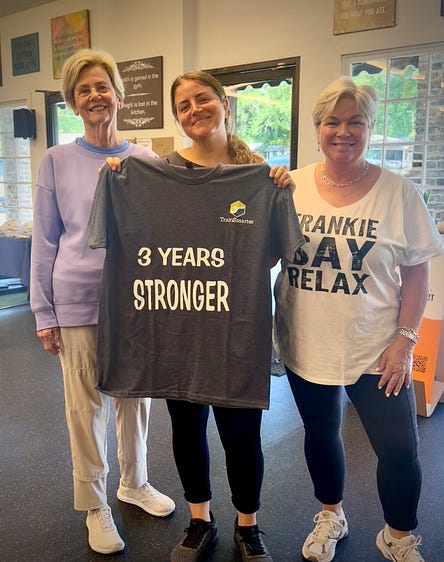
Three generations. Three workout buddies. One village.
You Can’t Supplement Your Way Out of This One
But you can build it, the same way you build strength, with small reps that add up:
1. Avoid training solo if you can. A training group, a workout partner, even a phone call while you walk turns exercise into connection.
2. Treat check-ins seriously. When we ask how you’re doing, we mean it. Tell us the truth. That’s part of why this works.
3. Create “movement relationships.” Accountability and friendship in the same hour!
4. Say yes to the community. The community around your training is doing more for your health than you realize. Show up even when you’d rather not.
We spend a lot of energy optimizing workouts, nutrition, sleep,..., and those matter. But the data is clear: the people around you have just as much impact..
Train hard. Bring someone with you. Your body keeps score of both.
