"Explosive Diarrhea" Is a Hot Topic. Here's What You Should Know About Managing the...Situation
I got a cancellation today from a client who said he was dealing with food poisoning.
I didn’t ask for details, but I hope he’s not dealing with Cyclospora, that’s been all over the news. Several of you have asked me some version of the same anxious question lately: "We don't have to worry about that here, right? I keep hearing it causes explosive diarrhea!"
Man, what could sound more horrifying than that?!
How would you deal with it?
A recent Time magazine article set out to answer that question, and since the subject is so “timely” (I can’t resist a pun…), I want to share the information — and hope you never need it!
Your Guide To Managing Diarrhea
1. Make your first defense Pepto-Bismol or Kaopectate. Imodium is often considered the preferred treatment for diarrhea, but it’s not always the best choice, depending on the devil you’re dealing with. Imodium works by putting the brakes on your bowel. Diarrhea caused by infections like norovirus, salmonella, Cyclospora, and some E. coli varieties needs to be gotten out of your body ASAP. Imodium is a better choice for noninfectious diarrhea. You may not always know the cause of the problem, so until you do, start with Pepto or Kaopectate, which are antimicrobial.
2. Take the situation seriously. If you have diarrhea that’s lasted more than 2-3 days, a fever above 101°F, blood in your stool, severe abdominal pain, or signs of dehydration, it’s time to stop playing amateur doctor and see a real one.
3. Rehydrate effectively. You need more than plain water because you lose electrolyteswhen you have diarrhea. Opt for one of the special rehydration drinks, like Pedialyte. Avoid drinks that contain sugar. That can work against you when your gut’s inflamed, since it tends to pull more fluid into your bowels rather than less. Avoid caffeine-containing beverages, too, which stimulate the bowels and can make things worse. It’s better to sip on liquid rather than try to chug greater quantities. Pedialyte popsicles can be especially helpful for getting a slow uptake of electrolytes.
4. Know the symptoms of dehydration. Dehydration can land you in the hospital in a hurry. Be on the lookout for dark urine, infrequent peeing, dry mouth, increasing thirst, and lightheadedness or dizziness.
5. Don’t self-medicate with “some antibiotics I have in the medicine chest. ”My daughter got food poisoning when she was young, and I don’t think I’ve ever seen her so sick. I was surprised to learn then that antibiotics aren’t necessarily advisable. Some E. coli bacteria release their toxins when exposed to antibiotics, which can affect the kidneys and potentially cause seizures and bleeding issues. Cyclospora needs to be treated specifically with Bactrim or Septra. This is no time to be playing doctor.
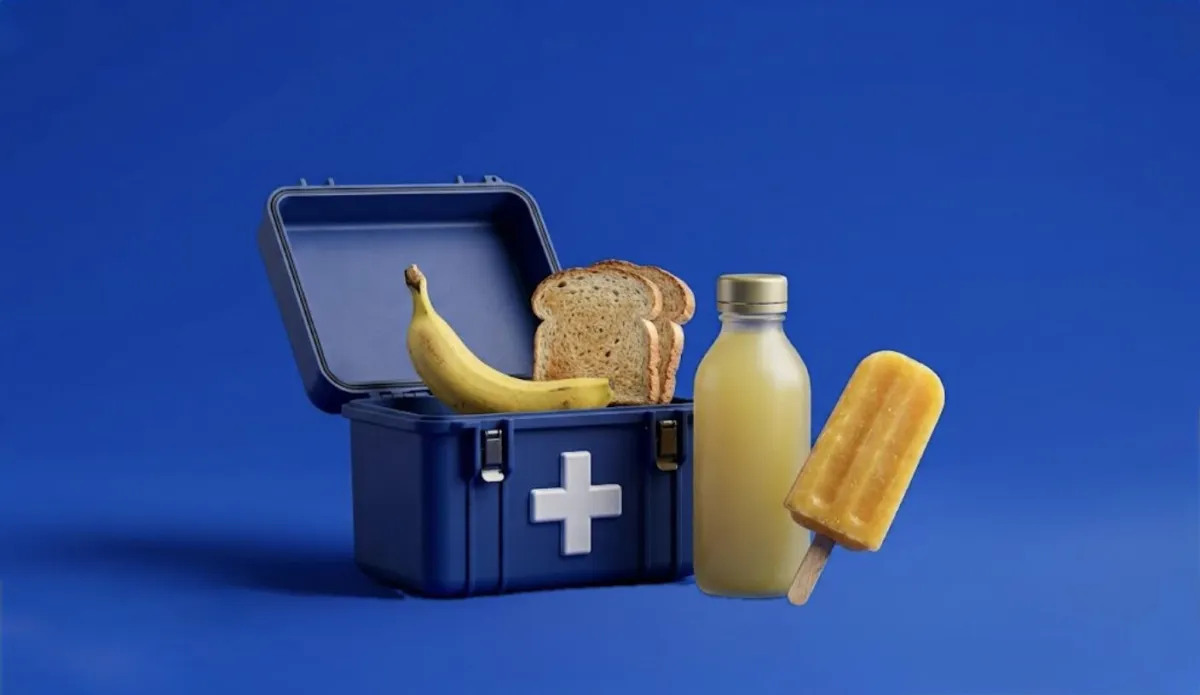
6. Eat foods that are gentle on the gut. Avoid foods that are fatty, fried, and high in fiber. Keep your diet bland and low fiber with foods like toast, rice, bananas, applesauce, crackers, and plain pasta. Gradually ease back into your normal diet.
7. Don’t go more than a day without eating! Your body needs quality nutrition to heal.
8. Know the enemy. Some stomach bugs are over in a day or two. Cyclospora can hang on for 3 weeks. If your doctor tests for bacterial infections, make sure you get tested for Cyclospora, too, so you can be treated with the appropriate antibiotic.
9. Take precautions to prevent contamination. This seems like a no-brainer, but don’t go swimming when you have diarrhea. Some diarrheal infections can contaminate pool water. Avoid preparing food for others, and wash your hands well with soap and water. Interesting fact: use regular soap and water. Alcohol-based sanitizer doesn’t do the job in this situation.
10. Allow yourself time to recover. Ease back into your regular eating and exercise routines. Your digestive system needs a chance to get back up to speed. Diarrhea can leave you feeling tired and depleted, so give yourself some grace and take your time becoming fully hydrated and getting your strength back.
Here’s hoping you’ll never need this information. Hang onto it, though, in case someone you know does. You might spare them a panicked 2 a.m. Google search!
