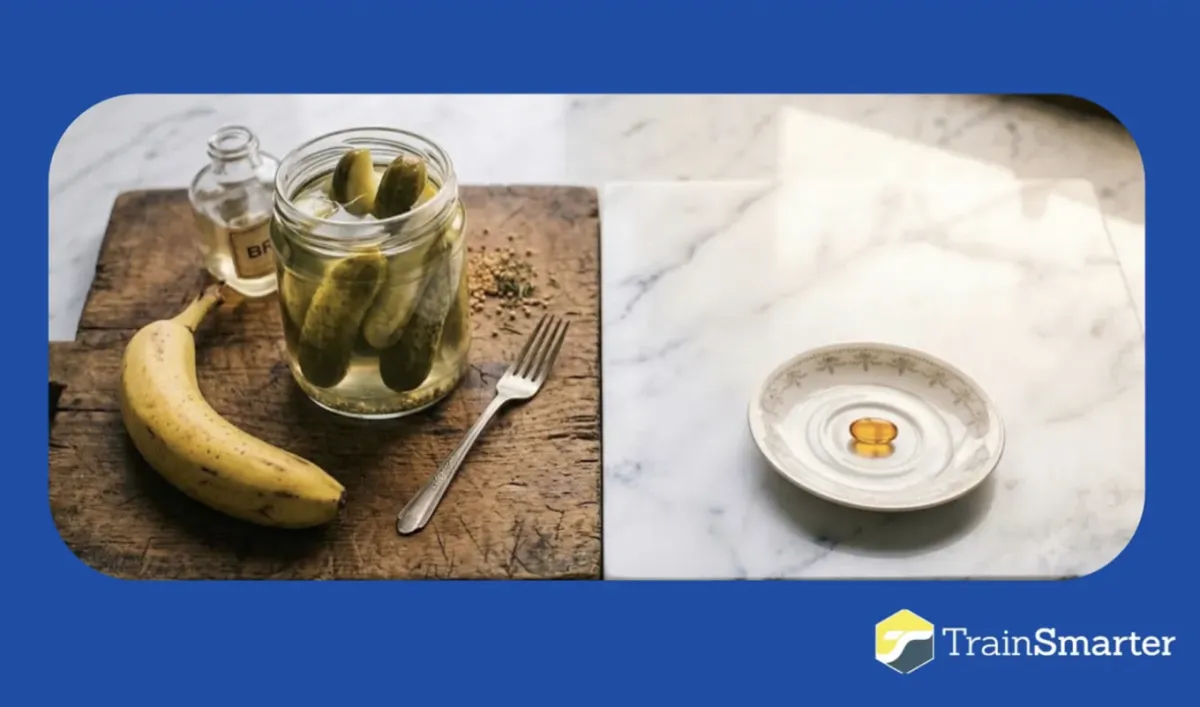
Why Pickle Juice Won’t Fix the Muscle Cramps Waking You Up at Night
I get asked about nighttime leg cramps a lot. Turns out, they’re prevalent — as many as 60% of adults and 40% of children and teens deal with them, and they're especially common during pregnancy. If you've ever been jolted awake by one, you’re not alone.
So when I stumbled across a Time magazine piece about pickle juice’s sudden moment of fame, I figured it was worth digging into what helps and what’s just a myth.
In the World Cup match between the U.S. and Australia, a referee went down on the field due to a muscle cramp. After a shot of pickle juice, he was back in action.
It’s not just soccer. Hockey and tennis players have used it. I’ve had clients swear by it.
Does it actually work? More importantly, if you’re someone who wakes up at 2 a.m. with a calf cramp that has you bounding out of bed, will pickle juice help you, too?
Short answer: It’s probably not what you need.
Why Pickle Juice Works —For Certain Cramps
Sports medicine researchers have found that pickle juice’s effect has less to do with hydration and more to do with taste. The brine’s sharp, acidic flavor seems to trigger a nervous system response that quiets an overexcited nerve mid-cramp.
You don’t even need to swallow it—you could just swish and spit. Some athletes use a spoonful of plain mustard for the same effect.
That makes it a genuinely useful tool for one specific kind of cramp: the exercise-induced kind that hits mid-activity, especially from fatigue. But it’s not a cure-all. Cramps during exercise can come from different causes —dehydration, fatigue, or simply running low on carbohydrates — and the fix depends on which one you’re dealing with.
If you’re cramping because you’re dehydrated, an electrolyte drink is better than pickle juice. Pickle juice tends to earn its reputation if you’re well-hydrated and just fatigued.
For non-athletes, there’s not much upside.
Pickle juice is high in sodium, and while an occasional shot is harmless, regular use can push you past recommended daily sodium limits.
Pickle juice is better at treating muscle cramps than preventing them. Prevention beats a cure!
Then There’s the Nighttime Cramp….
Most people searching “pickle juice for cramps” aren’t cramping mid-marathon. They’re waking up at night with a calf or foot cramp that seems to come out of nowhere, known as nocturnal leg cramps. That’s a different problem with a different (and better-researched) fix.
I’ve dealt with nighttime leg cramps myself, and Vitamin K2 has definitely made a difference — enough that when I mentioned it to clients dealing with the same thing, several had the same result.
This isn’t just anecdotal.
A study of older adults in China found that a nightly dose of 180 mcg of Vitamin K2 (as MK-7) dramatically reduced nighttime cramps over eight weeks — down to about one cramp a week from more than two and a half at the start, with shorter, less severe cramps along the way.
People noticed a difference within the first week, and results kept improving through the first month. Researchers believe K2 may work by affecting calcium channels in muscle cells, which helps reduce the involuntary contractions behind a cramp.
I wrote about the K2 research a while back. Read about it here.
Why It Didn’t Work for Everyone
Interestingly, a few clients told me K2 didn’t do much for them, which didn’t match what I was seeing in my own experience or with most people I’d recommended it to.
Digging into it, I think I found the reason: they were taking a combined Vitamin D/K2 supplement, not K2 on its own.
Vitamin K is fat-soluble, so you’ll absorb more of it when you take it with a meal that has fats or oils. Vitamins D and K can compete with each other for absorption when taken together. The recommendation is to space them at least three hours apart if you’re taking both, but a lot of bone-health supplements bundle them into a single pill, which may be blunting the K2 dose.
For the record, combining the two doesn’t seem to add much benefit. Separate research hasn’t found that taking K2 with D meaningfully improves bone or cardiovascular markers beyond what D does on its own.
I take K2 by itself, which may explain why it’s worked so consistently for me.
One safety note: Vitamin K can interact with blood-thinning medications, so check with your doctor before adding it if that applies to you. Most MK-7 forms are derived from soy, so if you have a soy allergy, look for one of the newer chickpea-derived options.
I Don’t Just Need More Potassium?!
If you’ve ever mentioned a muscle cramp to, well, almost anyone, you’re bound to have heard “You need to eat a banana!”
Let’s bust that myth: nighttime and exercise-related muscle cramps are not associated with potassium levels. In fact, getting too much potassium can cause cramping. Before you start bringing a banana to bed, know that the potassium connection is one of the most persistent — and least supported — myths out there.
Vitamin B6 and B12 deficiencies, on the other hand, can contribute to cramps. Keep that in mind if you’re prone to those deficiencies.
These Things Also Don’t Work
CoQ10 hasn’t been shown to help statin-related muscle symptoms, magnesium supplements (oral or topical) haven’t held up in studies for nighttime or pregnancy-related leg cramps, and coconut water, despite being a great potassium source, doesn’t have good evidence behind it for cramps, either.
Check Your Meds
Some cramps aren’t about diet or supplements at all. They’re a side effect of a medication you’re taking. Those most often linked to muscle cramps include Evista, Forteo, Aleve, albuterol, Xopenex, estrogen therapies like Premarin, and Lyrica, with a longer list of others reported less frequently.
While most nighttime cramps are harmless (if maddening), cramps can occasionally point to something more serious — cardiovascular, kidney, or liver issues, or in rare cases, ALS. If your cramps are new, frequent, or come with other symptoms, it’s worth mentioning to your doctor just to rule those out.
People on statins who have low Vitamin D levels are at higher risk for muscle pain and inflammation, another reason to check with your doctor.
Pickles Or Pills?
If you’re cramping during a workout or a match, pickle juice (or a spoonful of mustard) is a legitimate, fast fix, just know it’s treating the symptom, and staying hydrated beforehand is still the better strategy.
If you’re waking at night with a cramp that isn’t related to exercise, pickle juice was never going to be your answer. Vitamin K2, taken on its own, rather than bundled with D, is worth a conversation with your doctor….especially if you’ve tried a combination supplement before and assumed it just didn’t work for you.
