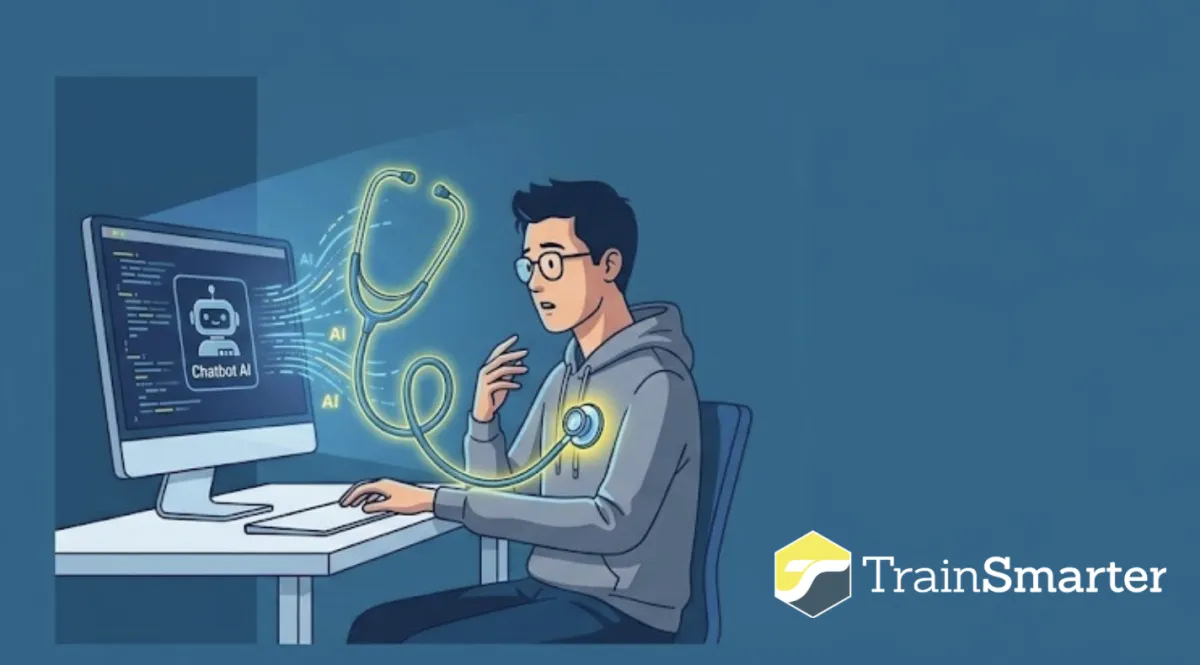
“Dr. ChatGPT" Will See You Now: How AI Can Change the Way We Talk to Our Doctors
One of my clients has been going through a trying time with an assortment of health issues. Part of the stress has been the wait to get appointments with various specialists.
Doing something with that waiting time feels better than doing nothing, so he’s been, in his words,“asking Dr. Google….”
These days, I imagine Dr. Google has turned his practice over to “Dr. ChatGPT” or “Dr. Gemini.”
You’d have to think that physicians wouldn’t think much of their patients consulting AI, but when you have a long wait to get an appointment, or maybe are just looking to learn more so you can ask better questions, there are specific instances that are appropriate for AI.
Coincidentally, I ran across a Time magazine article on this very subject.
AI has rapidly gone mainstream. About 1 in 7 adults over 50now use AI to look up health information, and among people under 30, it’s closer to 1 in 4. Usage is even higher in areas where it’s hard to get in front of a doctor, the situation my client is experiencing.
The article mentions the case of a 17-year-old who woke up at 2 am with sharp pain in his lower right side. He described his symptoms to ChatGPT, which advised that it sounded like appendicitis and he should get it checked out. He did, thank goodness, because hedidhave appendicitis. The ER doctors were surprised that AI had flagged it before they had a chance.
Speaking as someone who was loath to go to the emergency room, having that concrete recommendation would have made a big difference.
While that story had a happy ending, it’s important to note that there are no guarantees. AI can get things wrong, give outdated information, or be too generic to apply to your situation.
Still….doctors who study it say there’s a place for AI in how patients understand their health. One Harvard Medical School internist who studies AI in medicine commented that these tools can enrich a patient’s care journey.
Here’s how doctors interviewed in the article suggest using it:
Ask about general medical facts, not a diagnosis. "What does gout mean?” or “What happens when plasma cells mutate into cancer?” are the kind of textbook questions AI handles reliably, because the answer isn’t predicated on your particular situation. Where it gets shakier is when you’re asking it to weigh in on your specific case.
Give it context, but be thoughtful about what you share. The more detail you provide — your age, history, what a doctor already told you — the more useful and specific the answer will be. Be cautious about uploading medical images (X-rays, MRIs, EKGs) or your full medical record. AI tools are notably unreliable at interpreting medical images, and more importantly, whatever you upload goes straight to the company that makes the tool.
That’s a privacy tradeoff worth considering before you hit “send.”
Pay attention to how you phrase your questions. If you ask, “Why is chemo better than immunotherapy?” you’ll get an answer that assumes chemo is better, because that’s how you framed it. A neutral version, “What are the pros and cons of chemo versus immunotherapy for this condition?” gets you a more balanced answer.
The way you ask changes the information you get back.
Let it translate doctor-speak. This might be the most helpful everyday use. If your doctor uses a term like “grade” or “stage” and you nod along without really following, plug it into AI when you get home. You’ll get a clear, plain-language explanation in seconds.
Most tools often offer to clarify related terms you didn’t think to ask about.
Use it to prep for appointments. Describe your symptoms and ask what questions you should bring to your doctor. This is a great use for AI. It turns “I don’t know what to ask” into a list you can bring with you, organized around symptoms, possible causes, and next steps—and speaking as a recent patient, make sure to take notes!
Use it to double-check your care plan. Were you prescribed something and can’t quite remember everything your doctor said about side effects or when to call back? That’s a reasonable thing to run past AI once you’re home and can think clearly.
Keep your doctor in the loop. If you use AI to research your situation, don’t treat it as a second opinion to act on independently. Bring what you learned back to your doctor. Most doctors are open to that conversation. Being honest about it can lead to an even better conversation.
Think of your AI “consultations” as being the starting point for your medical consultation.
It’s not “replacing your doctor,” it’s more “showing up to your appointment prepared” and a resource for knowing which questions to ask.
