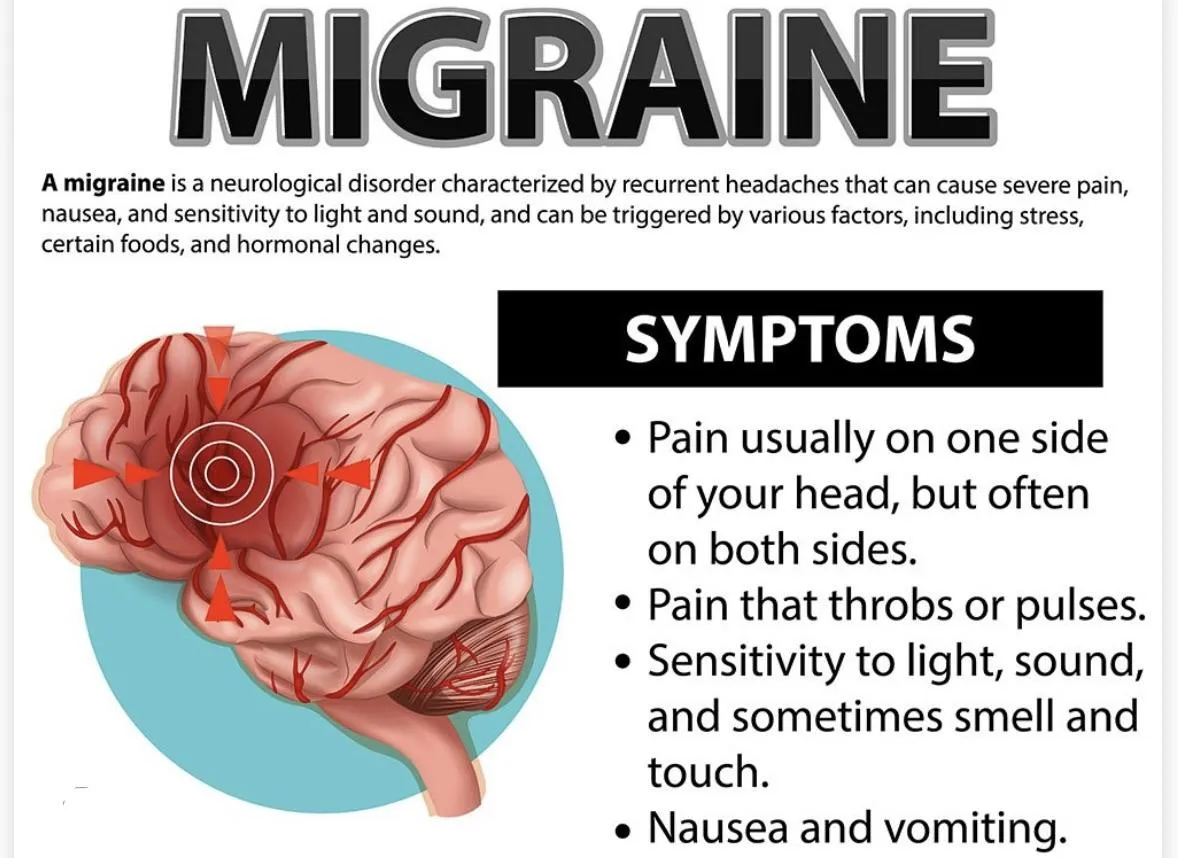
If Your Migraines Have Gotten Worse Lately, This Could Be Why
I have a surprising number of clients who deal with migraines--seemingly more than ever.
They’re invariably baffled by what sets them off.
Sleep? Maybe.
Stress? Definitely.
Weather? …Wait, really?
That last one may matter more than we realized.
A large review of medical research found that migraines aren’t more common than they were decades ago, but they’re becoming more severe and disabling.
Between 2005 and 2018, impairment from migraine attacks in the U.S. nearly doubled. Women are more often affected, but migraine rates in men are climbing, too.
What’s changed?
One leading theory: our environment.
Climate doesn't cause migraines, but it amplifies increasingly common, well-known triggers:
Higher temperatures.
Bigger temperature swings.
More frequent storms.
Worsening air quality.
Rapid changes in barometric pressure.
At last year's American Headache Society meeting, researchers presented data from headache diaries kept by 660 migraine patients, finding that for every 10°F increase in outdoor temperature, headache occurrence increased by about 6%.
Another study followed over 400,000 people in the U.K. for 12 years. Those with greater exposure to extreme temperatures and higher levels of air pollution were more likely to develop migraines--even if they hadn’t experienced them before.
The environment may be lowering the threshold for migraine attacks. If you’re already susceptible, it doesn’t take much to push you over the edge.
Why Weather Can Be Brutal
🤕 Barometric pressure swings can alter blood vessel behavior and intracranial pressure.
🤕 Heat and humidity increase dehydration risk and stress the nervous system.
🤕 Air pollutants increase inflammation and oxidative stress, which can activate migraine pathways.
Then there’s stress....
Stress is the number one migraine trigger, and climate-related disruptions pile it on.
That’s why so many people say,“I didn’t do anything different… "
They may be right.
We can’t control the weather, but we can be prepared for it.
Reduce the other stressors when you know conditions are stacked against you: stay hydrated, manage screen time, prioritize sleep, limit alcohol, and have medications or strategies ready.
Keeping a headache diary tracking sleep, stress, hydration, food, and weather patterns can be illuminating.
Exercise Helps Migraines
Strength training is the most effective form of exercise for reducing migraine, beating top-line migraine medications topiramate and amitriptyline.
It can result in migraines becoming less frequent, less intense, or easier to recover from.
Strengthening the shoulders, upper back, and lower back can reduce neck pain and tension, which play a role in migraine through the trigemino-cervical complex, a neurological pathway involved in migraine pain.
Neck pain is highly correlated with migraine.
Timing Matters, Too
Migraines are linked to circadian disruptions. Irregular exercise, sleep-wake cycles, and meal timing worsen attack frequency.
Evening exercise delays melatonin onset, resulting in late sleep and wake times, missing morning light, and increasing migraine risk.
Morning exercise aligns circadian rhythms, improves sleep quality, and reduces migraine burden.
Doctors recommend morning exercise outdoors for providing light exposure, keeping circadian rhythms aligned.
As the saying goes, "Control the controllables."
That's helpful in a world where environmental stressors aren’t going away.
