There's a Cholesterol Number Your Doctor Hasn’t Been Checking. That's About to Change.
Ever known someone who said, “Heart attacks run in my family…” or heard of someone who appeared to be healthy but died suddenly at a young age?
This cholesterol particle could have been the culprit.
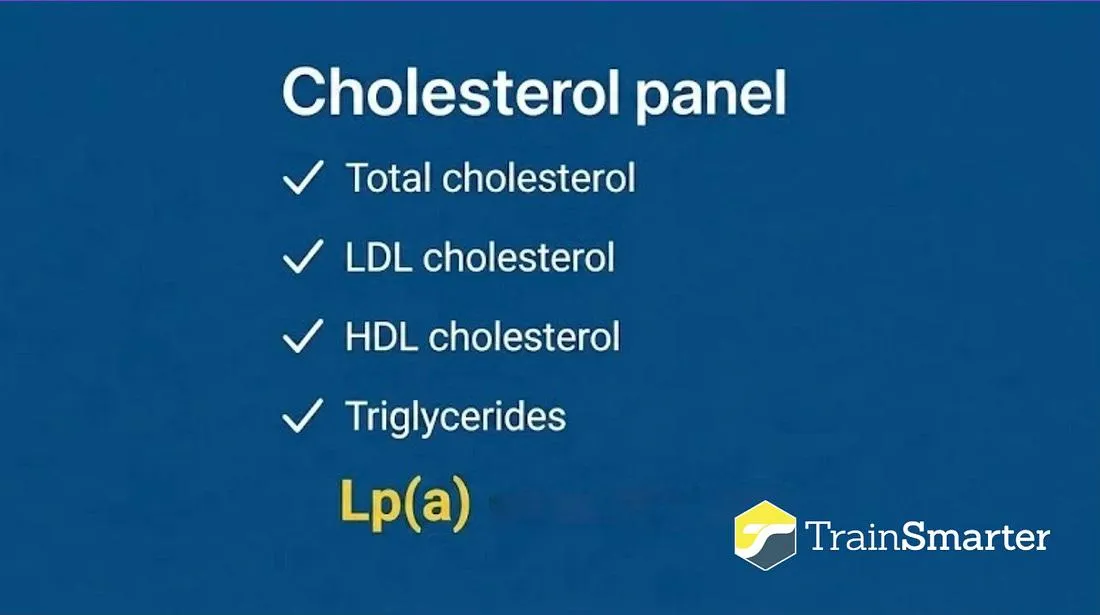
Running a cholesterol panel has been part of routine bloodwork for decades. It checks total cholesterol, LDL (”bad” cholesterol), HDL (”good” cholesterol), and triglycerides.
What’s never been checked in the history of that test is something called lipoprotein(a), or Lp(a).
Medical organizations, including the American Heart Association, have updated their guidelines with a groundbreaking recommendation: every adult should have their Lipoprotein(a) tested at least once in their lifetime.
About 1 in 5 people have a high level of it.
Your doctor can add it to routine bloodwork, and it's now often covered by insurance. At-home finger-prick kits are available if you'd rather not wait for your next physical, though a doctor should still weigh in on what the result means for you.
Like most cholesterol problems, it causes zero symptoms right up until it doesn't — when it triggers the blockage that causes a heart attack or stroke.
Until recently, doctors didn't know what todoabout it. Lp(a) is driven almost entirely by genetics. Unlike LDL or triglycerides, it doesn't respond much to diet or exercise. For years, that made it feel like information without a purpose.
But the evidence linking high Lp(a) to heart attacks and strokes has piled up so consistently that specialists now say the value of knowing outweighs the fact that you can't directly fix it.
It changes how aggressively you manage everything else.
What Is Lipoprotein(a)?
Lipoprotein(a)—pronounced L-P-little-A—is a specific type of cholesterol particle circulating in your bloodstream. Unlike standard LDL (”bad”) cholesterol, Lp(a) carries an extra protein tail that makes it exponentially more dangerous.
It sticks to artery walls faster than regular cholesterol, accelerating plaque buildup.
It interferes with your body’s ability to break down blood clots.
It carries pro-inflammatory molecules that can damage the aortic valve and contribute to hardening of the arteries over time.
Who’s at Highest Risk?
Because it's genetic, certain groups have a higher risk:
Racial Backgrounds: Highest rates occur in people of African or South Asian descent, followed by White, Hispanic, and East Asian populations.
Family History: Anyone with a personal or family history of early heart disease (under age 55 for men, under 65 for women).
Known High Cholesterol: People with a family history of high Lp(a) specifically, or a diagnosis of familial hypercholesterolemia.
For most people, one test in a lifetime is enough. The number doesn’t tend to change, aside from a handful of conditions like pregnancy, menopause, or certain thyroid or kidney issues.
What can you do about a high result?
Since there’s no reliable way to lower Lp(a) specifically, the strategy is to dial in everything else you can control: blood pressure, blood sugar, and especially LDL cholesterol.
Research suggests pushing LDL about 20 points lower than the usual target can help offset the extra risk from high Lp(a). That starts with the same habits that improve most cardiovascular risk factors — roughly 150 minutes of moderate exercise a week, a diet built around whole plant foods, not smoking, a healthy weight, and 7-9 hours of sleep.
Doctors may prescribe statins more aggressively in someone with high Lp(a), and a couple of newer medications can offer a small additional reduction.
A new class of medication currently in late-stage trials is designed to directly target and lower Lp(a) for the first time. It’s not clear yet whether lowering the number will translate into fewer heart attacks and strokes, but if it does, it could become one of the more significant advances in cardiovascular disease prevention in years!
If you want to learn more, check out this article on Lp(a),written for a general audience, rather than just doctors.
You can’t change your genetic code, but you can outsmart it. If you haven’t had a full cholesterol panel in a while, this is worth bringing up at your next physical. Ask specifically for Lp(a) to be included in your next cholesterol panel.
Knowing you carry this gene can add a whole new level of urgency to practicing healthy habits!
